General Information:
Height/Length: Medium
Weight: 9-12 lbs.
Life Span: 10-12 years
Coloring: Varied, white markings.
Area of Origin: United States
Similar Breeds: Siamese, American Shorthair
Breed History and Origins:
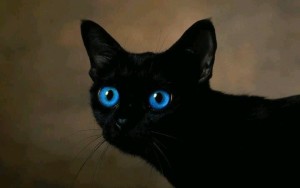 The Ojos Azules cats are a relatively new domestic breed that began in 1984 when a group of cat fanciers discovered several cats with dark blue eyes amongst feral cat populations in New Mexico. Their luminous and distinctive eyes caught their attention so much that they ended up rescuing a female cat with tortoiseshell marking. She had a shade of the darkest blue eyes they’d ever seen. They ended up naming her Cornflower and she became the matriarch of the Ojos Azules breed, which means blue eyes in Spanish.
By the time Cornflower reached full maturity, she was experimentally bred with male cats that did not have the same blue-eyed trait. The result was kittens with the same deep sapphire blue color. The fanciers believed that the blue eyes were a dominant gene, which meant that they had the basis of beginning a new breed. Soon after, they applied for a new breed status from The International Cat Association (TICA). In 1991, the application was approved for both short hair and long hair varieties, but the breed remained rare, having only 10 documented cats of the same lineage in 1992. Present numbers are still unknown but breeders are working on the Ojos Azules’ development.
With most breeds, the cats always have complementing coat and eye colors, but the kittens produced by Cornflower always had the same shade of blue eyes no matter what color or pattern their coats were. This means that Ojos Azules cats could have dark colored coats and still retain their blue eyes. The depth of color in these cats’ eyes is greater than what has been witnessed in any other breed, even Siamese. The trait also does not cause any deafness, squinting or cross-eye in cats.
Following a genetic investigation conducted by geneticist of TICA, Dr. Solveig Pluefger, it was established that the blue eye gene of the Ojos Azules had an indicator of a flattened tail-tip. It was found that when the gene is homozygous, cranial deformations would result, along with white fur, a small curled tail and most likely a stillbirth. However, when the gene is heterozygous, the lethal genetic mutations no longer would manifest. This resulted in the establishment that breeder must cross the blue-eyed cats with non-blue-eyed cats which would create a litter of nearly 50/50 blue and non-blue-eyed kittens.
The presence of such striking blue eyes in the Ojos Azules breed is due to the lack of melanin in the iris. This is true for other breeds including the Siamese, although, the reason for the absence of pigment does differ. The depth of the blue eyes in Ojos Azules cats is due to currently unknown and unexplained polygenetic variations.
TICA fully recognized the breed by January 5th of 2004. Only cats expressing the deep blue eye gene may be called Ojos Azules. Despite the potential for breeders to produce kittens with cranial defects, many have risen to the challenge of eliminating these defects while conserving the striking blue eyes of the Ojos Azules.
Size and Physical Characteristics:
As their name implies, the striking blue eyes of the Ojos Azules cats are the most prominent feature of the breed. Their eyes are large and round, all of which collaborate with their beauty. The breed is of medium size with rounded features. Their head is triangular and appears delicate with a rounded forehead, an angular muzzle and a small nose with a slight break on it. Their neck is arched and their tail is proportionate to their body. Ojos Azules cats are lean and well-muscled despite their size. They are quite agile and graceful too!
The breed does not display a fully developed undercoat but it is still dense in color. Their coat is short, very fine and very soft. There are some longhaired varieties as well. To add to this breed’s charm, these cats are accepted in all coat colors. White markings or patches are very common in their extremities, specifically their face, paws and tip of the tail. For showing purposes, white spots on their chest and belly are not acceptable and will be considered faults. Solid white coats in Ojos Azules is not desirable due to the fact that it is hard to distinguish them from common white, blue-eyed cats. Despite this, a white, blue-eyed Ojos Azules cat will not be deaf like most common white cats.
Personality and Temperament:
 These petite looking cats are very rare and not much is known about their personalities. What is known is that they are very friendly and affectionate cats. Ojos Azules cats are also known to be very active and fun to have as pets. They will enjoy engaging in playful activities with their human companions but they will be careful not to be too annoying.
The Ojos Azules breed is also very sociable, not only with humans but with other pets as well. They also tolerate young children and rough handling very well without retaliating. They are moderately vocal, but will tend to meow when necessary. Amongst other qualities, these cats are also clam, patient, people-oriented and not very needy or demanding of your attention. They love pouncing and jumping around the house, especially while playing with other people but they are also very cautious to not climb up on cabinets, bookshelves or other high spots. They will prefer to relax on the sofa or carpet.
Ojos Azules cats also love affection and will never give up on a good belly rub or petting behind the ears. They’re perfect for fanciers and families alike thanks to their docile nature and active personality. Although finding one is a completely different challenge altogether.
Nutritional and Exercise needs:
Diet is very important for cats for it will determine overall health. A healthy coat, teeth, body weight and energy level will depend almost completely on what they are fed. Cats generally are carnivores, so a protein based diet is always the best option. One of its primary food sources is fish, so be sure to provide it now and then. The amount fed depends on weight, activity and age. The type of food depends on the owner but make sure to provide quality and enough water if dry kibble is your choice. If their food is canned verify that only a few fillers are added.
When cats are indoors most of the time, they might not get enough exercise. Despite this, Ojos Azules cats are active. Cats have an evolutionary advantage of having a fast metabolism that works even when they are lying down. Anyway, it’s good to engage your cats in some type of daily activity to help maintain a healthy body weight and keep muscles strong and lean. This benefits the mind as well, keeping it alert and active. Exercise is also a fun way and a good opportunity for you to bond with your pet.
You may be able to set up an area especially for your cat to climb and play around. Cat trees and scratching posts can also be used for this purpose. Keep in mind that the Ojos Azules cats love jumping and pouncing, so interactive toys are a great option as well. Cat jungle gyms can be bought at a local pet store or you could build one yourself
You should try to spend about 10-15 minutes a day with your cat engaged in some type of physical activity. Spending time with children is one activity these cats will not only get exercise from but will also enjoy as long as you educate the children on how to properly approach their pets.
Grooming and Upkeep:

Characteristics unique to the breed:
Ojos Azules cats are a very rare breed and they are very hard to find. Despite these, these fun loving cats are great pets, being very playful, but not overly active and being very affectionate without being overly needy. They are indeed a happy medium.
| Advantages | Challenges |
| Require little maintenance | Very hard to find |
| Not needy | Not hypoallergenic |
| Playful | |
| Affectionate |
Health and Wellness:
Despite having blue eyes, the Ojos Azules cats do not have the health problems that other blue eyed cats present. A blue eyed Siamese can be susceptible to strabismus, commonly known as being cross eyed, and epistasis cats tend to be deaf. The gene responsible for both these conditions does not affect either the ears or the eyes of an Ojos Azules.
 Despite this, the breed does tend to suffer from other congenital health problems which includes cranial defects as well as stillbirth. The best way to make sure any individuals will not present any congenital problems occurring in an Ojos Azules, is to make sure they are coupled with a cat that doesn’t have blue eyes. It’s best to get a resulting litter with 50/50 chance of blue eyes than a stillborn or sickly litter. In 2004, breeding of these cats was stopped to prevent any further defects, but little by little it began again following strict rules.
Annual exams, vaccinations, heartworm prevention and flea and tick preventions are recommended. Initially make sure to deworm your cat and run basic blood tests as early diagnosis is always the best. Keep in mind that a good diet and regular exercise is always the best prevention.
Being a pet, it is somewhat common for them to suffer some types of eye problems, diarrhea and fleas. Allergic reactions are not common, but they may affect some people with cat allergies that come in contact with Ojos Azules cats.
Interesting Facts about the breed:
- Ojos Azules originate in the United States and descend from a New Mexican tortoiseshell cat named Cornflower, born in 1984
- Other than cats of the Ojos Azules breed, only white or color point cats can have blue eyes.
- The exact quantity if Ojos Azules cats in the world still remains unknown due to their rarity and hardships in breeding.