Welcome to our Siamese Cats page! Here you will find everything you could ever want to know about Siamese cats and a complete list of all the Siamese catteries we have located in the USA.
One of the oldest cat breeds, Siamese also have one of the longest life expectancies among cats, often living into their twenties. These striking, exotic cats with characteristic curiosity have fascinated cat lovers for centuries.
Siamese Cat Breeders Near You

Siamese
- Are you a cat breeder who isn’t listed? Add your information here.
We also highly recommend reading checking out our latest news articles at our blog. Find information on Cat health, nutrition, holistic healing, basic care, toys, and much more!
Siamese Cat Breed Information
Breed History and Origins:
The Siamese is one of the first distinct Oriental cat breeds, recorded in illustrations and documents dating back as early as the 14th century during the Ayutthaya period (1351–1767), in a region of Siam in modern day Thailand. (Clutterbuck, 2008) According to legend, the Siamese cat enjoyed regal status, owned by the royal families of Siam. They roamed freely within the palace and temple walls, serving as guardians of the Buddhist temples.
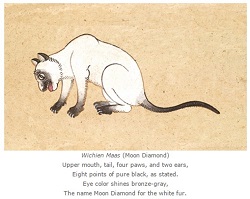 The first descriptions of the Siamese are thought to be included in a document entitled Tamra Maew, “Treatises on Cats”. While the original manuscripts have been lost, breed illustrations and descriptions derived from an early 19th century version of the Tamra Maew, housed in the National Library of Thailand, identifies Wichien Maas or “Moon Diamond”, the original moniker of the modern-day Siamese. (White, 2000)
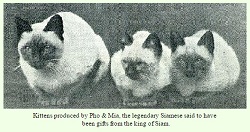 In 1884, a breeding pair of Siamese cats was acquired by the British Consul in Bangkok, Edward Blencove Gould. This pair, affectionately named Pho and Mia, was rumored to be a gift from the King of Siam himself. Gould returned to Britain and gifted the cats to his sister, Lillian Jane Gould, who was so enamoured by the breed she went on to co-found the “Siamese Cat Club”, in 1901. In 1885, Pho and Mia produced three kittens, Duen Ngai, Kalohom, and Khromata. The kittens, along with their parents, made the first public debut of the Siamese breed in Britain at London’s Crystal Palace Show, wowing the crowd with their unique appearance and graceful demeanor. The unveiling of the Siamese breed led to a surge of interest and desire to own these exotic cats. Cat fanciers began importing Siamese cats, a breed coined as the “Royal Cat of Siam” and it is believed that nearly all descendants of British Siamese cats originate from eleven of the originally imported stock.
 In the United States, the popularity of Siamese cats and breeding programs began in earnest during the late 19th and early 20th century. The Beresford Club Stud Book and Register was published in 1900, and proves a clear record of Siamese cats used for breeding in the United States. The first recorded pair of cats were “Lockhaven Siam” and “Sally Ward”, owned by Mrs. Clinton Locke, co-founder of the Beresford Cat Club. The breed continued to gain attention in the United States throughout the 20th century, and their popularity continued to increase throughout mid-20th century. As the popularity of the Siamese rose, the breed began to be featured in literature (Old Possum’s Book of Practical Cats; T.S. Eliot; 1939), movies (Lady and the Tramp; Disney, 1955) and even music (Like a Rolling Stone; Bob Dylan, 1965). Today, the Siamese is found throughout the United States, and is consistently ranked among the most popular breeds, a fact owing to their gregariousness, clever nature, hardiness, and physical appeal
Size and Physical Characteristics:
The Siamese has undergone a tremendous amount of change in appearance from the original Thai-based style to today’s modern breed standard. Originally, Siamese cats were recognized by a fairly large, sturdy build, a short back, short legs and a somewhat wedge-shaped, rounded head. Today, this style of Siamese is sometimes referred to as “applehead”, although this term has often been replaced by “classic-style” by breeders due to its somewhat derogatory nature. Originally, Siamese cats had a longer, thicker and less close-lying coat than today’s Siamese. Like modern Siamese, the original stock had blue eyes, although they were of a much paler hue than today’s commonly seen deeper blue. One of the most easily recognizable and distinguishing characteristics of the Siamese is coat pattern. Prior to the 1950’s, Siamese coat patterns were much less variable than today’s palette of color options. Siamese body color ranged from mahogany to light grey. The point pattern, originally very dark brown to black and called “seal point,” appears on the face, ears, tails, and feet, creating striking contrast against the lighter colored body coat.
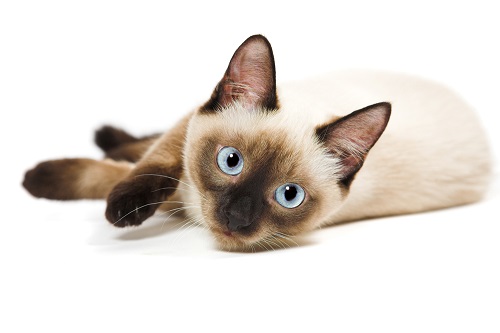
The breed standard of modern-day Siamese is described as having small to moderately sized bodies, with males ranging from 8-10 pounds and females weighing less than 8 pounds. They are sleek with an elongated body, tail, and neck. Well-muscled, elegant, slim, and stylish are all characteristics of today’s Siamese. Modern Siamese have a triangular head, thin snout, and large, pointed ears which should form a perfect triangle from the ears to the tip of the nose. The coat is short and glossy with a fine texture, and lies close to the body. There is a great deal of variation in today’s Siamese with regard to point and coat coloration, however; all color points exist due to a genetic mutation classified as a form of albinism. This mutation is temperature-specific and is therefore restricted to areas on the body that are naturally colder, the “points”. (White, National Siamese Cat Club, 2007) There are four recognized color patterns acceptable by the Cat Fanciers Association, as seen in the table below.
| Color | Pattern |
| Seal Point | Body: Pale fawn to cream, warm in tone, shading gradually into lighter color on the stomach and chestPoints: Deep seal brown
Nose and paw pads: Same color as points Eye color: Deep, vivid blue |
| Chocolate | Body: Ivory with no shadingPoints: Milk chocolate with a warm tone
Nose and paw pads: Cinnamon pink Eye color: Deep, vivid blue |
| Blue | Body: Bluish white, cold in tone, shading gradually to white on stomach and chest.Points: Deep blue
Nose and paw pads: Slate Eye color: Deep, vivid blue |
| Lilac | Body: Glacial white with no shadingPoints: Frosty gray with pinkish tone
Nose and paw pads: Lavender pink Eye color: Deep, vivid blue |
Although not recognized as acceptable for showing, there are many other fascinating and appealing color variations including: Cinnamon point, Red point, Tortie point, Flame point, Cream point, Caramel point, Fawn point and Apricot point.
Personality and Temperament:
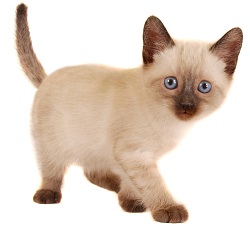 The personality of the typical Siamese is as distinct as its famous coloration. Intelligent, intensely curious, active, highly vocal, and demanding of its owners, the Siamese is well known for its strong character. Most Siamese are fun-loving and adventurous, and require an interactive and dynamic environment. The world is their playground and their style of play has been described as “dog-like” in nature; many Siamese will happily engage their owners in a rousing game of “fetch” with a favorite toy. Natural athletes, Siamese enjoy climbing and jumping (both indoors and out) and therefore owners must ensure a safe environment, securing bookshelves and breakable household items.
Although known to be friendly with other household pets, children and family members, Siamese tend to bond most closely with their primary caretaker. They may become overly distressed or even destructive if left alone for extended periods of time. Due to their highly dependent nature, Siamese tend to thrive when kept in pairs or small groups to provide entertainment and comfort while an owner is away. Although demanding, they do appreciate attentive owners, rewarding them with affection and devotion. Siamese are known to be quite cuddly, and are often found on their owner’s lap, on the couch, at the table, or in their bed. They will often follow owners from room to room, making their desire for attention clear with vocalizations. These vocalizations, a hallmark of the Siamese breed, are loud with a low pitched tone known as “Meezer” and have been compared to the sound a human baby crying. Most Siamese are prone to frequent vocalizations and this tendency should be considered by those seeking to own a Siamese.
Overall, the Siamese is a fun-loving, highly affectionate, and clever breed. Their playfulness and natural “joie de vivre” is retained from kitten-hood throughout their adult life, giving them a charismatic and dynamic temperament and a suitable match for anyone willing to embrace their joyous, if somewhat demanding, nature.
Grooming and Upkeep:
The Siamese requires minimal upkeep and grooming. Fastidious by nature, the Siamese tends to keep its coat well maintained and does not shed excessively. The short, sleek coat of this breed requires only a weekly brushing with a stainless steel comb and most Siamese enjoy this bonding time with their owner. Nails should be trimmed every 2-3 weeks. Siamese may be more prone to development of periodontal disease than other breeds and owners should therefore consider having their teeth professionally cleaned at least once per year.
Exercise and Nutritional Needs:
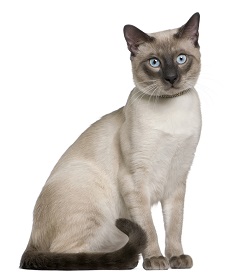 In conjunction with the strong and active personality of the Siamese, appropriate exercise and nutrition are required to maintain physical and mental health. The Siamese should be given ample space and an assortment of interactive toys to fulfill their daily exercise requirement. Many owners will find dedicating at least 30 minutes per day of interactive play will keep the Siamese content and prevent the cat from becoming destructive or depressed. Along with physical exercise, Siamese cats seek mental stimulation and prefer games or toys that require problem solving, such as finding hidden toys or treats. Siamese cats must be provided an assortment of safe toys to fulfill their exercise needs. Failure to do so will encourage this breed to seek out any household object which may endanger their health. Natural tendencies to climb require access to cat trees or perches and many Siamese enjoy the installation of “cat-walks” throughout the home. While Siamese cats should not be left alone outside unsupervised, as their curious nature may cause them to wander, they are known for their ease of being leash-trained and enjoy walks outside with their owner. Leash-training a Siamese is a fantastic way to allow for exercise needs to be met as well as bonding time with an owner.
The nutrition provided to the Siamese should match their high level of physical activity. A high-quality food will ensure the Siamese gets enough calories, vitamins and minerals to maintain their active lifestyle. Appropriate food for the Siamese should contain a minimum of 35% protein, and maximum of 15% fat. This diet will ensure the Siamese has enough calories to retain their muscular figure, but not accumulate fat. Ideally, Siamese should be provided grain-free food, which provides the highest number of calories from animal protein rather than fillers including corn and rice which are high in sugar. The ideal recommended dry cat food brands that will keep the Siamese healthy and fit are: “Wellness – Complete Health”, “Blue Buffalo – Freedom”, “EVO – Turkey and Chicken Formula,” and “Royal Canin – Siamese”, which provides an ingredient list designed specifically for the Siamese breed. Because Siamese tend to eat many small meals a day, up to 22, choosing a high-quality food that digests easily is important, regardless of brand.
When choosing food, it is important to feed dry kibbles versus canned food to the Siamese. With a tendency to develop tooth decay and periodontal disease at a higher rate than most cat breeds, limiting the development and/or progression using dry food can help maintain oral health. Dry food helps remove tartar as well as preventing excessive food from becoming stuck between teeth which can lead to gingivitis.
Health and Wellness:
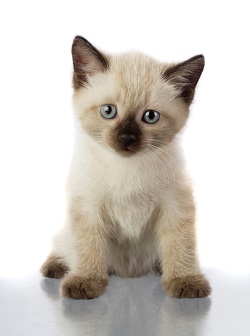 While overall the Siamese breed is hardy and free of health issues, there are still a few concerns to address. Siamese cats are prone to respiratory issues and have an increased susceptibility to upper respiratory tract infections. Most commonly, these infections are caused by Calicivirus and/or Feline rhinotracheitis virus. Calicivirus, which lasts 7-10 days, causes ulcers in the mouth and around the nose, accompanied by nose and eye discharge, fatigue, and fever. Feline rhinotracheitis, lasting 2-4 weeks, causes symptoms which include fatigue, nose and eye discharge, and occasionally drooling. Both of these viruses may be exacerbated by opportunistic secondary bacterial infections which may be treated with the use of antibiotics. However, these viruses can be avoided by making sure that cats and kittens are up to date on vaccinations and keeping cats indoors where they will not have access to other sick or stray cats. While all cats are able to contract viruses leading to respiratory infection, Siamese are particularly susceptible due to a long, thin nose which may harbor viruses and bacteria more easily than other cat breeds. This physical attribute also makes Siamese more sensitive to anesthesia, and care must be taken to ensure that airways and nasal passages are not blocked during surgery or dental cleanings.
During the development of the breed, there were genetic mutations that were commonly observed in Siamese cats. Many Siamese were born cross-eyed or with a kink in their tail. These unintentional side-effects of selective breeding did not cause health issues or illness, but were issues of aesthetic appeal. Nevertheless, today careful breeding of the Siamese has all but eliminated these mutations, and fewer and fewer Siamese are born with crossed eyes or kinked tails.
Some Siamese cats may develop issues with balance, called Vestibular disease. This is genetic disease which causes problems with nerves in the inner ear. Often Siamese with Vestibular disease appear to be off-balance, tilt their heads or appear dizzy and disoriented. Fortunately, most often Vestibular disease is a fairly minor problem and often resolves by itself within a few weeks of development or can be treated with medication prescribed by a veterinarian.
Characteristics Unique to the Breed:
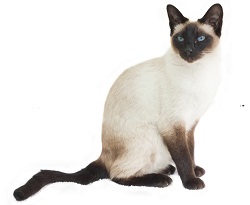 There are many traits which makes the Siamese unique among cats. Siamese are among the most intelligent cat breeds. They are also extremely playful. When these two traits combine the result is a one-of-a-kind personality among all cat breeds. Siamese enjoy games “fetch” with an owner, a somewhat dog-like trait and unique to Siamese in the feline world. They are happy to learn how to walk on a leash, again, more closely resembling dogs than any other cat breed. Siamese seem to “speak” with a distinctive voice and often appear to carry on between themselves or with their family. Tone and volume can vary, with regular pauses while they wait for a response. The physical appearance of the Siamese is perhaps the most recognizable feature of this breed. Striking contrast between light coats and dark points as well as emotive almond-shaped blue eyes make the Siamese nearly impossible to confuse with any other breed. Finally, Siamese are among the most long-lived of any cat breed, frequently thriving 20 years or more, and recorded at ages up to 37! The physical appeal, and playful, devoted nature of the Siamese make it truly special among all cat breeds, and with its great longevity Siamese owners can enjoy life with their companions for a very long time.
Interesting Facts about the Siamese:
- The Siamese breed dates back more than 650 years.
- Queen Elizabeth was given a Siamese kitten to celebrate her marriage to Prince Philip, Duke of Edinburgh.
- Siamese cats cause very few allergy problems due to their short, fine coats.
- Seal point Siamese get darker coats as they age.
- All Siamese kittens are born white, and only start to get point coloration around 2-3 weeks.