Welcome to our Tonkinese Cats page! Here you will find everything you could ever want to know about Tonkinese cats and a complete list of all the Tonkinese catteries we have located in the USA.
The Tonkinese cat breed is one of the most popular companion breeds. They are social, playful, loving, active, and last but not least, they are true cuddlers. So, it is no wonder why the Tonkinese is an increasingly popular pedigree cat choice for cat lovers worldwide. They have a feline beauty that is the perfect combination of everything people love about cats – seductive eyes, enchanting poise, and elegant athleticism. They are a living work of art.
Tonkinese Cat Breeders Near You

Tonkinese
- Are you a cat breeder who isn’t listed? Add your information here.
We also highly recommend reading checking out our latest news articles at our blog. Find information on Cat health, nutrition, holistic healing, basic care, toys, and much more!
Tonkinese Cat Breed Information
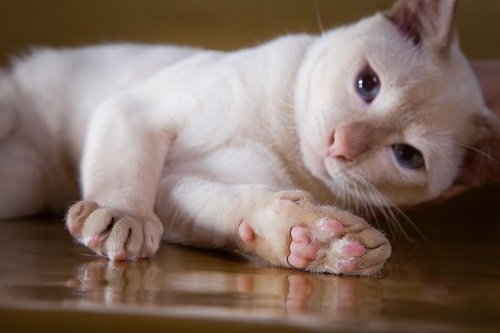
The perfect looks of the Tonkinese are overshadowed by their loving personality. The character of the Tonkinese can charm even a dog person. It seems like these cats live by the motto “perfection is in moderation,” so they are not too extreme in their appearance. That is why people have become very interested in this breed – it is multifaceted. While muscular, active, and playful, they are also social and affectionate lap cats. They are beautiful and elegant, but more importantly, the Tonkinese cats have a wonderful personality and disposition.
The best thing about them is that they remain kittens throughout their life.
The Tonkinese breed is actually produced by crossbreeding between two beautiful breeds: the Siamese and Burmese. That is why they share the personality and temperament of their parents: from the Siamese side, they get intelligence and curiosity, and from the Burmese side, they get their loving personality.
With their warm temperament, they crave human attention and do not like to be left alone for long periods. They prefer playmates, including little children, other cats, and even dogs.
General Information:
Height/Length: medium
Weight: 6-12 pounds
Lifespan: 10 to 16 years
Coloring: their coat comes in three patterns – mink, solid, and pointed – and eight colors
Area of Origin: Canada
Similar Breeds: Siamese, Burmese
Breed History and Origins:
Planned breeding of the Tonkinese began in the 1960s. However, some people believe that versions of this breed have been around for centuries. Due to the fact that the Siamese and Burmese existed in the same regions, the chances for intentional or unplanned outcrossing are high.
Chocolate Siamese were among the first cats to come from Siam to England in the late 1800s. The earliest records describe these cats as Siamese with green-blue eyes and burnished chestnut coats. Researchers believe that they were not all from the same type, but rather represent other types like Tonkinese, Burmese, and Havana Browns.
Wong Mau was a small-sized, dark brown cat that belonged to Dr. Joseph Thompson. At first, this cat was thought to be a chocolate-colored Siamese. Chocolate Siamese cats eventually disappeared in Great Britain, but they still existed in Burma and Thailand, where they were the offspring of natural mating between free-roaming Burmese and Siamese cats. Wong Mau was one of them, which means the destiny of this kitty was to be the matriarch of some of the most beautiful breeds today: the Burmese and Tonkinese.
The first intentional crossing between the Burmese and Siamese began around 1950 with Milan Greer. He started the breeding program, but others continued it as more and more people became interested in producing a breed in dark-brown color and points. The first association that registered the Tonkinese was the Canadian Cat Association in 1967. The Cat Fanciers Association, however, granted recognition in 1984, and by 1990, all major cat associations had accepted the Tonkinese breed for Championship.
This breed was first called “Tonkanese,” but in 1971, the breeders changed the name to “Tonkinese”. They thought this name was more attractive since it had a nice exotic accent, even though these cats had nothing to do with the Bay of Tonkin.
Size and Physical Characteristics:
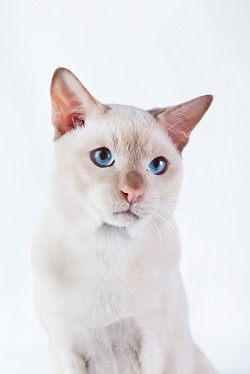 The Tonkinese cats are an elegant blend of their parents. They are beautiful medium-sized cats which are surprisingly muscular and heavy. Their fur is soft, silky, and short. They started off as a designer breed, so they have different colors, but three patterns are pretty common: pointed like the Siamese; solid like the Burmese; and mink, a mix of the two. The most popular pattern is the mink, probably because the shading is subtle, unlike the pointed pattern which is more pronounced.
| The Tonkinese | |
| Head: | Rounded, wedge-shaped head that’s a little longer than it is wide |
| Coat: | Short coat in medium thickness that feels silky and soft |
| Adult Weight: | 6-12 pounds; there’s no difference in males’ and females’ weights |
| Size/Shape: | Medium |
| Legs: | Slim legs with oval paws |
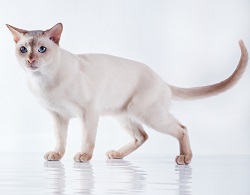
| Tail: | Proportionate in length to the body, tapered toward the end |
| Voice: | Vocal, but talks and purrs in a soft voice |
Their heads are slightly rounded in a wedge shape, and they are longer than they are wide. Their ears are also medium-sized and their eyes have an open almond shape in beautiful colors, depending on the color of the coat: blue, aqua, green, yellow-green and greenish gold. Their eyes are slanting along the cheekbones toward the ears’ outer edge. Similar to their parents, their eyes are actually colorless and reflect light, just like the sky does.
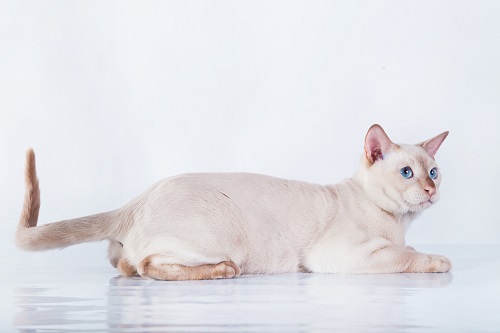
Their coat is short, soft, and silky with a lustrous sheen. The points, which are the ears, mask, legs, and tail, are darker in comparison to the body, but they merge very gently with the body color. The most common colors include platinum, blue, natural, champagne, caramel, cream, tortoiseshell, and apricot. The three coat patterns are:
- Solid – low contrast between the legs and body; green and yellow-green colored eyes
- Mink – medium contrast between the legs and body; aqua eyes
- Pointed – high amount of contrast; blue eyes.
Their legs are muscular and slim and the hind legs are longer than the forelegs, while their tails are proportionate in length to the body and tapered near the end.
Personality and Temperament:
 Just like the appearance, the personality and temperament of the Tonkinese is a mix of their parents. They actually get the best of both breeds.
This breed is all about moderation. For example, they are energetic and active, but not hyperactive. They often run around the house and do tricks like a circus monkey. They love entertaining their owners, so they make amusing companions. When they are tired, they are wonderful lap cats, but if their human is busy, they sit contentedly.
They believe that people exist to serve them. They crave affection and demand attention – all done in a loving way, of course. The payoff is a funny and happy cat that knows how to get along with everyone in the home, including children and other pets. A happy Tonkinese will be a constant source of love, joy, and laughter. They are very playful, so leaving a Tonkinese alone for a longer period of time is not recommended. People who are usually at work all day are advised to keep two Tonkinese cats so that they can keep each other company. Bored Tonkinese cats usually do not cause much trouble, but who knows – when bored, they might decide to do some “renovations” around the house.
Their voice not loud and raspy like the Siamese. However, they do believe in cat’s right of free speech, so they will always share stories of their daily adventures with their human.
Tonkinese are active, intelligent, and sociable. They will escort their humans’ guests into the guest room and put on a show for everyone to enjoy. Their favorite games are fetch, hide and seek, and tag. When a shoulder or a lap is not available, they will perch on the highest spot they can reach so that they can keep an eye on everything that happens in their world.
They are very smart, so their brain needs to be challenged often with new tricks and puzzle toys. Owners usually train their Tonkinese with positive reinforcement in the form of praise and treats. This way, they can learn amazing tricks.
Nutritional and Exercise Needs:
Tonkinese and nutrition
Healthy food means a healthy cat. Tonkinese will eat anything when they are hungry, but their owners must keep an eye on their feline friend’s nutrition plan in order to avoid painful and costly diseases in the future.
They are not prone to obesity since they self-regulate the amount of food they eat.
As with all cats, a balanced diet is crucial for Tonkinese. There are no special considerations. However, gingivitis is the most common health problem for this breed, so incorporating chewy food like raw chicken necks is recommended in order to keep the gums and teeth clean.
A raw diet is considered to be the most healthy and beneficial diet plan that leads to happier and healthier Tonkinese in the long run. If a raw food is not feasible, vets recommend wet or moist canned food over dry foods. While dry food might be less expensive and more convenient, vets claim that wet food guarantees essential hydration in Tonkinese.
Some owners give their cat supplements in order to improve their overall health. These supplements come in the form of immune boosters and probiotics that add good bacteria to the digestive system. Needless to say, treats also play an important role in the cat’s diet, and moreover, they can be used in training the cat.
Last but not least, it is of the utmost importance that Tonkinese drink an adequate amount of water. If the cat doesn’t drink enough water, vets advise adding ice cubes in the food, placing water bowls around the house, or even using cat fountains.

Tonkinese and exercising
Tonkinese don’t have any special requirements regarding exercising. They are very playful, so getting different toys and playing games with them is highly recommended. In general, they are not destructive unless they are isolated from their humans for a long period of time.
Tonkinese should be kept as indoor cats only because they lack defensive instincts. This could make them vulnerable if left outside.
They need to scratch in order to fulfill their natural instincts, like every other cat. Any type of scratching post is good for them as long as they can reach up to their full height.
As for toys, they do not demand pet shop toys; homemade toys can encourage them enough to get moving.
Grooming and Upkeep:
Same as their parents, Tonkinese are easy to care for. They do not require much except for brushing once a week to remove dead hair from their body and distribute skin oil. Other grooming they require is nail trimming, teeth brushing, and ear cleaning. As for bathing, they keep their fur clean all the time, so bathing is rarely needed.
Removing loose hairs can be done with “finger brushing”: the owner wets their hands and runs them smoothly over the cat’s coat, so that the loose hairs can be collected on the fingers and thus removed from the cat’s body.
As it was mentioned in the beginning of the article, Tonkinese are prone to periodontal disease, so daily dental hygiene is highly recommended. Brushing their teeth should not be a chore for Tonkinese, but an enjoyable time for both the cat and the human. Everything needs to be done slowly in the beginning so that the cat can start looking forward to the brushing sessions.
Regular cleaning of the cat’s ears is often overlooked, mostly because owners are afraid of hurting their Tonkinese in the cleaning process. Regular monitoring of the cat’s ears for wax and debris will help the Tonkinese to stay healthy and alert to every move in the house.
As for nail trimming, manicures can also be an enjoyable experience. The best time to trim their claws is when they are relaxed or sleepy.
Characteristics Unique to the Breed:
| Advantages | Challenges |
| Strong, healthy, affectionate | Vocal |
| Pet friendly | Can be very dominant |
| Very intelligent | Shows anxiety if left alone |
| Loyal and devoted | |
| Doesn’t require much grooming |
Tonkinese are strong, healthy cats with few known hereditary illnesses. There is no inbreeding in Tonkinese, which makes them a healthy breed. They are curious, affectionate, and strong-willed, and are one of the few cat breeds that get along with dogs. They do not require much grooming like Persian or Himalayan cats do, and they are very intelligent, known for being very trainable.
However, intelligence and mischief always come together in a combination. They will decide when they are in the mood to play, and will drop toys at their human’s feet, not giving up until their human starts playing with them. They are affectionate, which might make them anxious if left alone for a longer period of time.
Health and Wellness:
Due to the fact that the Tonkinese is a blend of Siamese and Burmese, this breed is susceptible to conditions and diseases brought from both bloodlines. They might develop some of the following diseases:
- Amyloidosis – deposition of amyloid in the liver that can lead to lesions, dysfunction, or failure of the liver
- Asthma – a chronic progressive disease in cats: inflammation of the small passageways of their lungs
- Aortic stenosis – a serious concern that might lead to various complications
- Strabismus – a term that describes the abnormal positioning of the eyeballs, a very common condition in cats
- Gastrointestinal conditions – this disorder is characterized by regular diarrhea and vomiting. Vets recommend abdominal surgery to retrieve samples of the intestinal lining
- Lymphoma – a type of cancer in lymphocytes, a type of white blood cell
- Nystagmus – a condition that causes rhythmic and involuntary oscillation of the eyeballs
- Gingivitis – an inflammation of the gums
- Upper respiratory infection – the nose, throat, and sinus area are susceptible to various infections caused by bacteria and viruses.
5 Interesting Facts about Tonkinese:
- It takes up to two years for the cat’s coat color to fully develop.
- One cat breeder from New Jersey helped make Tonkinese popular by mentioning this breed on the show “Jeopardy”.
- Tonkinese cats were once called Tonkanese, but today many people know them simply as Tonks.
- A Tonkinese cat had the largest single litter any cat has ever had – 19! Unfortunately, four of them were stillborn, but the surviving 15 kittens consisted of 14 males and 1 female.
- The oldest known Tonkinese was Dickens. He died just two weeks before his 22nd birthday
Why Choose a Tonkinese?
Tonkinese is the perfect family cat. They will settle well into every home and will regard themselves as a part of the family. Great with children and other pets, not overly demanding, and easygoing, Tonkinese are great companions for both small and large households. Active and muscular, they enjoy playing and climbing. With their warm and loving personality, this breed craves attention.
In conclusion, Tonkinese are great pets for everyone. Tonkinese owners claim that there is a special sense of pleasure when their kitty is around.