Welcome to our Persian Cats page! Here you will find everything you could ever want to know about Persian cats and a complete list of all the Persian catteries we have located in the USA.
Persian cats have a reputation for snobby elegance, but don’t let them fool you. They eat regular cat food and they also like ordinary folks just as much as they do James Bond supervillains. These longhaired kitties need lots of grooming and attention, but in return they will give you their hearts. Persians are prone to kidney disease, but this can be avoided if you buy your cat at a reputable cat breeder.
Persian Cat Breeders Near You

Persian
- Are you a cat breeder who isn’t listed? Add your information here.
We also highly recommend reading checking out our latest news articles at our blog. Find information on Cat health, nutrition, holistic healing, basic care, toys, and much more!
Persian Cat Breed Information
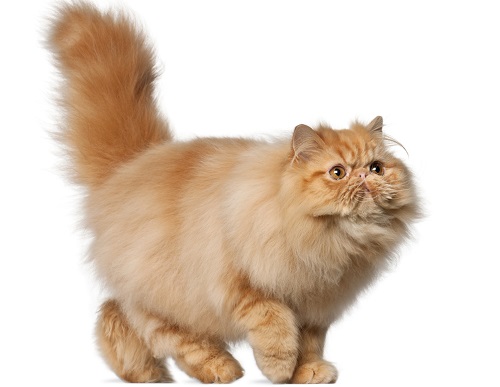
History and Origins:
Thanks to their beauty and affectionate personalities, Persian cats are North America’s favorite feline as well as one of the oldest cat breeds in the world.
Persians and Angoras
Like all cats, Persians are descended from the African wildcat. Since the wildcat has short hair, it’s a bit of a mystery where Persians got their long hair. Some people believe wildcats may have bred with longhaired cats like the Pallas cat or sand cat. Perhaps it was just a genetic mutation that the people who first domesticated cats liked enough to breed for.
We do know that the Italian writer Pietro del Valle brought both Turkish Angoras and Persian cats home from his travels in the Middle East. It was the first time Europeans had seen longhaired cats and they were a big hit.
For a while, people called both white Angoras and colorful Persians Asiatic cats. By the 19th century, though, the Persian cat breed was different enough to stand on its own. It now has longer hair, thanks to the Angora strain, and is more sturdy.
Persian cats may have been bred to have eye colors other than blue to avoid the genetic deafness that comes with blue-eyed Angoras.
The three types of Persian cat
Persians were a huge part of the very first cat show, which was held in London in 1871. Today everybody wants a white Persian cat, but in Victorian times the most popular color was solid blue-gray.
Persian cat breeders soon were busy trying to improve the breed. Those who liked the dark coloring that Siamese cats have on their face, feet and tail tried to breed Siamese with Persians. The result was the Himalayan cat.
A new Persian began to appear in the early 20th century. These cats had flatter faces. Today this has been carried to the extreme. A flat-face Persian’s muzzle, nose, and eyebrows line up vertically. Traditional Persians with round, full faces like a doll’s are still around, too.
In the 1950s, American breeders mixed Persians and American Shorthairs, coming up with the Exotic Shorthair. These hybrids have either a full or flat face, but their fur is much shorter, though it’s still thicker and a little bit longer than a true shorthaired breed.
Are these all “real” Persian cats? It depends on the organization. The Cat Fanciers Association accepts Himalayans as Persians, but only if they have blue eyes. Other organizations call Himalayans a separate cat breed. Everybody considers Exotic Shorthairs a separate breed except the International Cat Association, which refers to them as “Persians in pajamas.”
Size and Physical Characteristics:
| The Persian Cat | |
| Face: | Round (doll-face Persian) or flat (show Persians) |
| Fur: | Long, very thick undercoat and overcoat, about 80 color variations |
| Adult Weight: | Males: 9-14 pounds. Females: 7-11 pounds |
| Size/Shape: | Medium to large, muscular, round |
| Legs: | Stubby, thick bones, large paws with long fur between toes |
| Tail: | Medium length with long, feathery fur |
| Voice: | Quiet and melodious, purrs and chirps |
On first glance, a Persian cat looks just like a mound of fur with big, round eyes.
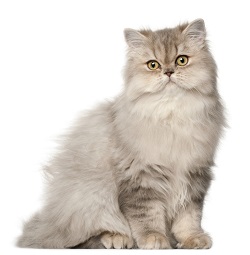 Persians are round and muscular
Cat fanciers describe Persians as “cobby.” This means their bodies are short and round, sort of like a corn cob. Persian cats have broad chests and muscular shoulders, with a dense mane on their short, thick necks. Their legs are short and have thick bones, the better to support that tough body and all its fur. Persian cats do have large paws for such stumpy legs.
The tail is plume-like and is usually carried low, although Persian cats will raise it up like an exclamation point when greeting their favorite people.
All purebred and hybrid Persians have round, massive heads. Traditional Persians have sweet, round doll faces. Flat-faced Persians resemble a Pekingese dog. Ideally, both for show and for health reasons, these extreme Persian types should have the top of their noses no higher than their lower eyelids.
Persians come in many colors
All Persian kittens have blue eyes at first because they lack melanin. Starting at around three weeks of age, those big, round eyes take on a permanent color which tends to match their fur.
Many Persians have orange eyes. Those with silver or golden fur tend to have green or greenish-blue eyes. A white Persian cat may have blue eyes, copper eyes, or one eye of each color.
Speaking of color, that luxurious fur comes in about 80 different color combinations. Generally speaking, Persian cats may be a solid color or have more than one color. Some have mixed colors and patterns, like black and red tortoiseshell or tabby with bull’s-eye markings on either flank. Himalayans have long fur but the same dark fur mask on its face and also dark ears, paws and tail as on a Siamese cat.
Some say that the chinchilla Persian, with its white fur tipped with shimmering silver, blue or gold, is the most beautiful of all. Only an expert can tell the difference between chinchillas and the slightly darker shaded Persians. All chinchilla and shaded Persian cats have either green or blue-green eyes.
Personality and Temperament:
Persian kittens are energetic, but these cats settle down as adults. Persian cats have mellow personalities and aren’t very active, since their short legs don’t lend well to jumping up on things.
Persians are laid back and social
Persian cats are definitely elegant, but they’re not necessarily aloof. Like any cat, they need a little time to get used to new people and situations. They do bond closely with people who give them a lot of love, attention, and respect.
When they’re not playing with catnip or batting cloth mice around, Persians spend most of their time lying in the sun or snuggling up beside you on the couch or bed.
If your schedule keeps you away from home a lot, it might be a good idea to get two cats so they can keep each other company. This works best with two kittens, especially if they’re litter mates, but an older cat and a kitten can learn to adjust to each other, too.
These cats aren’t extremely vocal, but you can have “conversations” with them. When this happens, they chirp or meow after you speak to them.
Persian cats are adaptable…sort of
Give it a safe place and careful introduction to something new, and your Persian cat can adapt to almost anything. It will fit into your routine whether you are single or have a family. Persians get along well with children as long as the kids don’t manhandle them.
A Persian cat will also welcome new people into its home, once it feels secure. In fact, Persians tend to be rather too trusting of strangers. Since they are valuable animals, they should be kept indoors as much as possible so they’re not stolen.
They’re also dog friendly, although it helps to introduce the dog and cat while they are still young. Here, the cat’s media image is more appropriate. Persian cats do like to dominate other animals and will probably become the alpha individuals in your household.
Grooming and Upkeep:
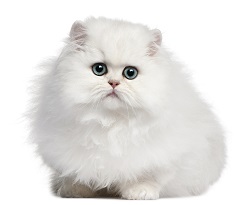 There’s no doubt about it; Persian cats are high-maintenance pets. Their long fur needs to be combed and brushed frequently, and they should get baths at least once a month or more often.
Persian fur needs lots of care
Persians have two layers of very thick body fur, as well as that feathery tail and the dense mane around their head and shoulders. Depending on color, their coats are either shiny and silky or cottony soft.
Either way, daily grooming with wide- and fine-toothed steel combs, followed by brushing, is needed to prevent matting and tangles. This constant care also cuts down on hairballs and makes shedding less of a problem.
Ideally, you should start training your Persian kitten for this by gently combing its fur a few times, while you talk to it and pet it. Then, once the routine is established, expect to spend about 15-20 minutes each day carefully combing the cat with wide- and fine-toothed combs, and then brushing its fur gently but thoroughly. Any tangles or mats should be carefully clipped out. Your veterinarian can show you how to safely do that.
Speaking of clipping, some owners give their Persians a dramatic “lion cut,” especially in hot weather. Shaving is also needed sometimes when the cat’s coat has been neglected and is all matted up. The vet will have to do this while the cat is under anesthesia.
Because of their facial structure, flat-face Persians tend to have watery eyes. You will need to clean the cat’s face thoroughly, paying special attention to its eyes. Veterinarians sell special cleaning cloths for this, but a moist washcloth or rag will also work.
Whether it’s a doll-face or flat-face Persian, be sure to check its ears and nose while you’re working around the cat’s head.
A Persian cat needs a bath at least twice a month and preferably every week. You should expect some drama. Some cat breeds like water – the Persian isn’t one of them. But it’s worth doing regularly. Clean fur doesn’t mat, and washing it once a week also cuts down on allergy problems.
Use lukewarm water and a cat-safe shampoo and conditioner. Afterwards, blot Kitty dry with a towel, and if possible, use a blow dryer on a low setting as you brush out the fur again.
Vet visits and shots
Persian kittens get their first shots for distemper, cat flu, and rabies at eight weeks of age. The feline leukemia vaccination comes at nine weeks. After three to four weeks, they’ll need booster shots, and two more rounds of booster shots for feline leukemia after that. Once this basic immunization is given, Persians need annual shots to keep up their immunization, although they can go two years between distemper shots.
Unless you are planning to breed Persian cats, both males and females should be neutered. This is usually done at around 8-10 months of age, but adult cats can be neutered at any time (females shouldn’t be fixed while they’re in heat).
When you visit the vet, there will be other animals in the office. It’s a good idea to keep Kitty in a standard cat carrier that’s big enough for the cat to turn around in and that has some cushioning on the floor for comfort.
Persian cats are generally healthy and these yearly shots should be the only routine vet visit that’s needed.
Health and wellness:
 Persian cats sometimes have hereditary eye or heart problems, but the main genetic disease associated with them is polycystic kidney disease, or PKD.
Cysts on the kidneys
Almost 40% of purebred Persians come down with PKD. They develop tiny fluid-filled sacs on their kidneys that eventually overwhelm the kidneys, shutting them down.
Polycystic kidney disease has been found in kittens, but it develops so slowly that most cats aren’t diagnosed with it until around seven or ten years of age. By then, there isn’t much the veterinarian can do except put Kitty on a special diet and give it special fluids and medicine to keep its kidneys working as long as possible.
Owners can help out by watching for some of the early signs of PKD:
- Increased drinking and urination
- Weight loss
- Nausea and vomiting
- Lethargy
The sooner PKD is found, the longer Kitty can live. Persian cat breeders look for the genetic signs of the disease before they allow a cat to breed. This way, the PKD gene will eventually disappear from the Persian cat breed. Right now, though, be sure to purchase your Persian cat from a reputable breeder and ask if either of the cat’s parents had PKD.
Other Persian health issues
Like many other cats, Persians tend to get urinary tract infections and urinary stones because they don’t drink enough water. This is less of a problem when the cat only eats canned food or homemade cat food that has a lot of water mixed in with it. Always be sure there is plenty of fresh water available.
Flat-faced Persians have a few problems of their own. Besides watery eyes and eye infections that happen because their tear ducts are shorter, they sometimes have difficulty breathing. They snore and cough more than doll-face Persians, and head colds are harder on them. Traditional Persian cats can still use their noses if they catch a cold, but a flat-faced Persian may have to breathe through its mouth and could even develop a sinus infection.
Last but not least, remember that you can totally prevent one of the worst health problems any modern cat faces: obesity.
Cats are like people in that each one has its own normal weight range and activity level. Get to know your Persian cat’s baseline and then adjust its food as needed. Feed it all it wants, and if there is anything left over, feed it a little less next time. Limit treats and make sure Kitty gets exercise every single day.
And try not to resent it for lying there on the couch watching you work out on the treadmill!
Nutritional and Exercise Needs:
Forget the leaded crystal dinnerware and candlelight. A Persian cat will eat anything you set down, if it’s hungry enough. Don’t forget the water!
A balanced diet and lots of water
All cats are obligate carnivores. This means that they must eat meat. In addition to the right amount of protein, commercial cat foods also give them the same balance of fat, carbohydrates, vitamins, and minerals that the animal would get from prey in the wild.
Canned cat food also has the same amount of water as prey – about 70%. This is important because cats are descended from desert animals. This means that they don’t always have the urge to drink, even when their bodies need water.
Cats can live just on dry cat food, but they will get slightly dehydrated. This could affect their kidneys over time. That’s especially bad for Persian cats because of their risk for inherited kidney problems, so be sure there is plenty of fresh water available along with the kibbles.
Persians have the same nutritional needs as other cats, but flat-faced Persians sometimes have a hard time picking up dry food kibbles. If this is a problem for your Persian cat, ask the vet about special kibbles designed for these little kitties.
Persian cats and exercise
All cats have a high metabolism. This lets them lie around and still burn off some calories. However, they do need exercise to keep their bones and muscles healthy, their minds alert, and their weight down.
Persian kittens get plenty of exercise, but obesity is a problem for adults. Grown-up Persian cats are naturally quiet and also spend most of their time indoors. Plan a few play breaks – around ten minutes each – a few times a day. Balls, toy mice, and pendulum toys are all popular. Some Persians will even chase a crumpled piece of paper.
A word of warning, though. It’s tempting to use your fingers for peekaboo and hunting games, especially with kittens. This triggers Kitty’s predatory instinct. You are really training it to attack your hand. When that kitten grows up, it will still think it’s a game and you will get some nasty scratches. It’s a lot safer to just offer your Persian kitten a toy or something like a feather on a stick to chase around.
Not all cats go for cat trees, but they serve many purposes. They give the cat a safe place to lounge in, and Kitty has to burn some calories to get up there. Trees also have built-in scratching posts. Scratching stretches a cat’s muscles and gives it a place (other than your furniture) to groom its claws and mark its territory. If you don’t get a cat tree for your Persian, be sure to get a scratching post or pad.
Unique Persian cat Characteristics:
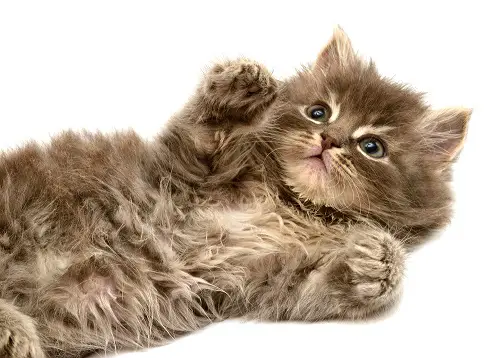 Persian cats are famous for their intelligence, quiet temperament, and those beautiful faces.
A Persian cat will take direction
Persians are a little more intelligent than most cats. This, along with their willingness to sit still for a long time, is why you see them in ads and movies. A white Persian cat is gorgeous, of course, but it is also Kitty’s docile nature that make this cat breed so popular with motion picture directors.
Of course, there are limits. Remember how Ernst Stavro Blofeld’s trademark white Persian cat panicked as stunt explosions went off in one of the James Bond films? Of course they kept the scene in the movie, because any cat would panic. Other breeds would have blown up along with the set, but Blofeld’s cat just wiggled and gripped the actor’s arm. Hopefully Donald Pleasence, the actor who played Blofeld, wore padding under his jacket!
Flat-face and doll-face Persian cats
Nature gave the Persian a round, broad face with a normal-sized muzzle. Twentieth-century Persian cat breeders have developed an adorable cat that has an extremely flat face
These unique face types highlight an interesting difference between ordinary pet owners and cat fanciers. Owners looking for a pet generally prefer the doll-face Persian. However, the flat-face Persian takes the top prize so often at club meetings that some call it the show Persian.
Interesting facts about Persian cats
- Famous Persian cats include Colonel Meow, the Persian cat meme; Ernst Stavro Blofeld’s white Persian cat; and Jerry and Gimmel, the two white Persians who star in cat food ads.
- Colonel Meow is in the Guinness records for the longest fur on a cat (9 inches, or 22.87 inches).
- Some say the cartoon cat Garfield is a Persian because he has a round, friendly face (and yes, Persian cats do come in orange with tiger stripes). However, Jim Davis, who draws the comic strip, says that his inspiration for Garfield came from all the barn cats he knew while growing up on a farm. Maybe there was a little Persian blood in there somewhere!
- A Persian cat that is kept indoors can live for 15 years or more. The average lifespan for an outdoors Persian is four years, tops.
- Queen Victoria’s favorite cats were her two solid blue Persians.
- The Cat Fanciers Association has ranked Persians the most popular cat breed in North America for the last 30 years.
- A Persian cat had the largest single litter any cat has ever had where all the kittens survived: 14!
- The Persian cat breed is called the Longhair or Persian Longhair in the United Kingdom.
Whether you are looking for a pet or a show cat, Persian cats are one of the oldest and most popular breeds in the world. Their long fur and big round eyes are beautiful. They do require a lot of care, but they develop a close bond for life with someone who loves and respects them.