Welcome to our Maine Coon Cats page! Here you will find everything you could ever want to know about Maine Coon cats and a complete list of all the Maine Coon catteries we have located in the USA.
New England is known for its cold winters, rugged mountains, and lovely scenery. The region’s native domestic cat – the Maine Coon – fits in perfectly. It has long, weather-resistant fur, as well as a sturdy build and a gorgeous appearance. This breed of cats is as big-hearted as it is big in size.
Maine Coon Cat Breeders Near You

Maine Coon
- Are you a cat breeder who isn’t listed? Add your information here.
We also highly recommend reading checking out our latest news articles at our blog. Find information on Cat health, nutrition, holistic healing, basic care, toys, and much more!
Maine Coon Cat Breed Information
History and Origins of the Maine Coon:
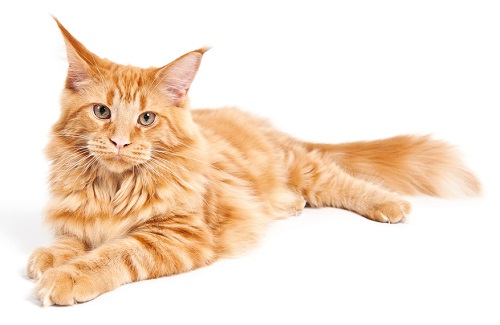
No one knows for sure how these all-weather, rugged beauties got to North America, but they’ve certainly proved themselves to be excellent working farm cats, loving pets, and consistent show winners.
Legends and guesses
Domestic cats originated in Egypt and the Middle East, and there are plenty of tall tales about how they got to Maine.
Some people say this native longhaired breed is descended from cats that belonged to Marie Antoinette. Supposedly she secretly packed up all her belongings, including the kitties, and stored them on a ship just prior to escaping to America during the French Revolution. The ship sailed, but she didn’t make it.
Others suggest that the breed is descended from the long-haired cats kept by an American sea captain named Coon who sailed up and down New England’s rocky coast.
A look at the Maine Coon cat’s big paws and tufted ears has given some the idea that it’s the result of breeding between domestic cats and bobcats. Unfortunately, this is genetically impossible, as is a hybrid between cats and raccoons.
A more realistic guess about Maine Coon origins is that it is descended from Norwegian Forest Cats that Vikings brought to the New World when they visited Newfoundland about a thousand years ago. Indeed, there may be a DNA link between Maine Coons and a few cats in Iceland. Unfortunately, it isn’t solid and there is no historical evidence to back it up. The only clear evidence from DNA tests is that Maine Coon cats are genetically related to several European cat breeds.
To near extinction and back
However it found a way to the wilds of New England, the Maine Coon certainly was domesticated by European colonists and used for pest control on farms. Maybe the breed got its name because it usually comes with brown fur, has a ringed tail, and likes to wash its food in water, just like a raccoon.
Proud owners first showed off their native cats at Maine’s county fairs during the 1860s. Starting in the 1870s, these cats began winning top show prizes in cities up and down the Eastern seaboard and as far west as Chicago.
The good times came to an end in the early 20th century, when cat fanciers switched their affection to newly imported longhaired cats like the Persian. The Maine Coon won no more shows. By the 1950s, it actually was reported to be extinct.
Fortunately that wasn’t true. Dedicated cat lovers began to boost the breed’s popularity outside New England and tried to get it officially registered with the major cat fancier associations. They certainly succeeded! Today Maine Coon cats are the third most popular breed in America, according to Cat Fanciers Association records.
Size and Physical Characteristics:
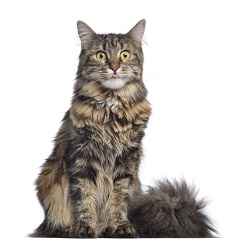 Maine Coon cats are huge, ruggedly built, and designed for survival in cold, wet weather. They also have the well-balanced agility needed to chase small prey as well as to escape larger predators like mountain cats and bears. Finally, their long, weather-resistant fur keeps them warm and dry, no matter what the harsh New England climate throws at them.
Head and body
Maine cats have such long fur that it’s difficult to see the shape of their heads and bodies. There’s no doubt that a Maine Coon is long, though. A six-year-old named Stewie – measuring 48.5 inches (about 1.2 meters) from nose to tip of tail – held the record for the world’s longest cat until his death in 2013!
Maine Coons have wedge-shaped heads and fairly wide faces that may either appear very sweet or downright wild. They have high cheekbones and wide-set eyes that may be green, gold, copper, blue, or odd colors. Their ears are long and tapering, with big tufts of fur.
There’s a neck in there somewhere, but all you will be able to see from the outside is Kitty’s gorgeous furry ruff. It looks even more glorious because the shaggy fur on the animal’s shoulders is a little shorter than elsewere on its rectangular body. The Maine Coon cat has a broad chest and strong legs ending in big round paws that have tufts of hair between the toes.
The tail can be as much as 14 inches (36 cm) long. Maine Coons like to wrap it around their feet and can even use it as a seat on cold, wet ground.
Weather-resistant, beautiful fur
The first thing you notice about a Maine Coon cat is its size, and next, all that fur. These cats usually are brown tabbies, but they also come in solid colors and about 70 other color combinations.
A Maine cat’s coat is heavy but silky. It grows in a natural layered shag and falls smoothly all around the animal’s body. There are three layers – two undercoats and a top layer of water-resistant guard hairs.
In the New England forests, Kitty had to wade streams and plow through snow, so it developed longer fur on the exposed areas – tummy, tail, and legs, especially the hind legs. However, summers, though short, can be hot. That’s why the cat’s undercoat is a soft and downy cushion instead of a thick layer of woolly insulation.
Maine Coons may be domestic cats but some of the males have thick neck ruffs that look like a lion’s mane. All of these cats also have especially thick and feathered tails. Tabbies will have dark-colored ring patterning on the tail fur.
Personality and Temperament:
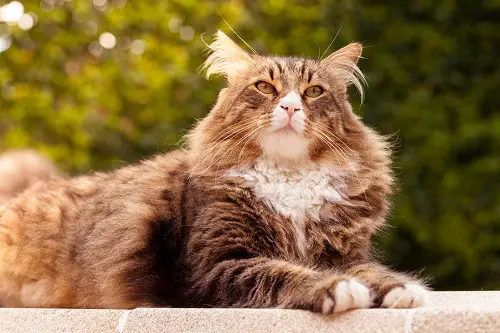
Once they get to know you, Maine Coon cats are good-natured and sociable. They make good family pets and are also excellent companions and therapy animals. Your Maine Coon is playful and will show its love by always being near you rather than by climbing up into your lap.
One of the family
When it first meets you, a Maine Coon cat seems cautious and aloof. Breeders say that this adaptable animal is just checking everything out before it settles down. Once comfortable, Kitty will fit right into any environment, including homes with resident pets.
Maine cats get along fine with children and will bond with the whole family, not just one person. They want to be part of everything that’s going on, though they aren’t intrusive or demanding. Owning a Maine Coon means having a giant, quiet presence nearby almost all the time.
They’re not always quiet, of course. These massive kitties have funny high-pitched voices and can be quite talkative, especially if you join them in conversation.
Playful, smart, and loving
Maine Coons aren’t the friskiest cat breed around, but they definitely like to have fun. Hunting games and anything that involves interaction with people will delight them. They’re also intelligent and sometimes can learn how to play fetch or do tricks.
After playtime is over, though, a Maine Coon prefers to settle down next to you on the couch or to find a good spot to lie down and watch as you do housework or use the computer. It will follow you from room to room, too. Some owners say that their Maine cat loves them just like a dog would.
Maine Coon Grooming and Upkeep:
 It’s not as difficult as you might think to groom a Maine Coon cat, though you will have to do it a couple times a week. Besides that, the cat will need to its claws and teeth regularly taken care of.
Fur care
These cats shed moderately, especially in the spring and fall. They certainly have a lot of hair, but it is silky and their undercoats aren’t dense. Maine cats are actually easier to groom than other long-haired breeds. Their fur is oily, though, and it needs to be brushed out at least twice a week to distribute the oil and avoid tangles and matting.
Most people can’t resist running their fingers through a Maine cat’s silky, soft fur over and over again. When it comes to grooming, though, you will also need a few tools. A brush and both wide- and fine-toothed combs work well. Some owners like to use electric clippers to trim excessive hair on the ruff, underside, and britches, especially during warm weather. Scissors are easier for dense matting, but be careful; cats can move very quickly.
These cats are big, especially the males, and even experienced feline groomers sometimes need to have a helper. It is mostly just to handle the weight. Maine Coons are quite docile and usually just sit quietly during grooming, enjoying the attention that comes with it.
Unless you will be showing your cat, it isn’t necessary to wash a Maine cat very often, unless it gets into a lot of dirt or has litter box staining in its private areas. If you must wash Kitty, be careful. This breed has an all-weather coat, and the wrong shampoo will remove essential oils. Your veterinarian can probably tell you what products are best for bathing a Maine Coon.
Claws and teeth
All cats groom their claws by scratching, but this doesn’t remove every bit of dead nail. The claws also can get too long, putting the cat at risk of injury. Maine cats have a lot of fur on their paws as well as extra tufting in between the toes, but it is very easy to get at the nail. Your vet can show you how and also what tools to use.
Don’t get disheartened by the numbers. Maine Cats tend to have polydactyly – extra toes on all four paws – in addition to the normal 18 nails (five on each fore paw and four on each hind paw). However many claws your kitty has, they will all need to be clipped every couple of weeks.
Cats are prone to gingivitis, so they also need to have their teeth brushed once or twice a week. It doesn’t have to be after every meal. You can use plain gauze on a finger or a special brush and cat-safe toothpaste from your vet.
Nutritional and Exercise Needs:
All cats need a diet that is extra high in protein. As descendants of desert cats, they also need a little help with their daily water intake. Maine Coons aren’t as active as some other breeds but they do like to exercise. Because of their size, they need a lot of room.
Protein and water
Like all cats, Maine Coon cats are strict carnivores and must eat meat to survive. Out in the northern wilderness, they lived off prey. Now that we humans have tamed them, we also have to make sure that these hefty cats get plenty of protein and a healthy diet.
Each serving of commercial dry and canned cat food that meets guidelines set by the Association of American Feed Control Officials (AAFCO) has the right amount of protein for Kitty, and the correct balance of fat, carbohydrates, and other nutrients. This is true internationally, as well as in the United States. Just look for the statement on the label.
All domestic cats are descended from desert wildcats, who developed a metabolism that got all the water it needed from prey. This is why wild Maine Coons were dependent on their prey to stay hydrated, even though were surrounded by water out in the Maine forests.
Canned commercial cat food is roughly 70% water, which is about the same amount a cat would get from prey. This works out well, but if you and Kitty prefer dry food, that’s okay, too. The cat will get a little dehydrated, but if fresh water is constantly available, it will drink enough to stay healthy.
Moderately active
If they had a high energy level, these gargantuan cats could be quite destructive in an apartment. They do like to jump up on things, play hunting games, and splash around in the shower, but they prefer to spend most of their time relaxing and loving up their human family.
A cat tree or window seat offers these laid-back kitties the chance to work out and then to relax in a high place where they can survey their domain. Cat trees also come with built-in scratching posts. Scratching is how a cat stretches its back muscles. Even a simple scratching post will work, as long as it’s steady enough to take the animal’s weight. You might need to do some trial and error to get the scratching material and location that works best for your Maine Coon cat.
A Maine Coon loves to interact with you, whether you make it hunt laser dots, bell balls, or catnip mice. It will even learn how to play fetch. All it needs is enough room to run around a little and to turn around.
Unlike many cat breeds, Maine Coons also like to play in water. They’ll dabble in the water dish or use their dextrous paws to turn on the faucet (yes, they’re smart). Just don’t expect the same level of enthusiasm at bath time!
Unique Maine Coon Characteristics:
| The Maine Coon | |
| Face: | Slightly longer than it is wide, with a prominent muzzle and big oval eyes. |
| Fur: | Medium to long. Dense, all weather. Color: Any, usually brown tabby. |
| Adult Weight: | Males: 12-15 pounds or more. Females: 9-12 pounds. |
| Size/Shape: | Massive. Rectangular, with a broad chest and plenty of muscle. |
| Legs: | Medium long and sturdy, with big round paws. |
| Tail: | Long enough for the cat to curl up and sit on, with thick, feathery fur. |
| Voice: | Vocal, chatty. Can be very loud. |
A Maine Coon cat is huge, with a lion-like mane and lots of shaggy long fur. It looks wild and yet is placid and will give you its heart, not asking anything but a little attention in return.
A huge, furry cat
This breed is the biggest of all domesticated working cats. Some Maine Coon males can reach 40 inches (about 1 meter) in length and weigh 20 pounds or more without being obese. Add in this kitty’s “snow-shoe” paws and tufted ears, and those legends about their having the bobcat and lynx ancestors seem a bit more believable.
Most of Kitty’s bulk is in its long body. Owners love to show their Maine Coon cat off in pictures, but it takes two strong arms just to hold the cat up when its body is stretched out. Even then, the tail and furry mane usually lap over the sides.
This cat’s long coat lies close to the body, but its shaggy layering makes it fluffy. Whatever its coloring and pattern, Kitty’s fur swirls around gracefully, especially on the neck ruff and britches. Its bushy tail has plume-like feathering that keeps Kitty’s feet and seat warm and dry when curled up.
A beautiful and peaceful nature
If Maine Coons were hyper and extroverted, their size would make them too intimidating to be pets. Fortunately, they like the quiet life and are always focused on their human family. Nothing makes them happier than sitting nearby, chatting with you and “helping” you along with whatever you are doing.
Thanks to its wild roots and Yankee independence, this cat doesn’t get too lonely when you are at work. It will mostly just lay back and watch the world go by until you get home. Then it may come and greet you at the door with some chirps and trills.
Once it becomes part of the family, a Maine Coon cat is very calm, though playful. It will submit to a lot of handling, which makes it good with children. However, younger children should be supervised and told not to pull too hard on Kitty’s gorgeous fur.
Because these cats are shy around strangers, they don’t take well to cat sitters. If you’re going on vacation, this adaptable cat enjoys traveling and would love to come along.
Health and Wellness:
The Maine Coon is a robust breed because only the healthiest individuals made it through those long New England winters. However, they do have a few health issues associated with them. In addition, Maine cats will need to get vaccinated against the most common feline diseases.
Genetic disorders and arthritis
The most common cardiac disease in cats is called hypertrophic cardiomyopathy (HCM). In Maine Coon cats, HCM is caused by the MyBPC (myosin-binding protein C) genetic mutation. As much as a third of all Maine Coons tested have shown this mutation, but not all of them go on to develop the disease. There is no cure for HCM, but it can be treated with medication, special diets, and other veterinary treatments.
Another hereditary disease associated with Maine Coons is spinal muscular atrophy. This nerve disorder causes posture problems and makes Kitty’s gait unsteady, but it isn’t painful and is never lethal. Affected cats can live long, happy lives indoors.
Fortunately, there are DNA tests for both HCM and spinal muscular atrophy.
Maine Coons can get kidney problems, too, but those aren’t common. A 2013 study showed that the breed isn’t genetically prone to polycystic disease, although it can get ordinary renal cysts. Also, young Maine Coon cats sometimes develop chronic kidney disease.
Another health problem is hip dysplasia. This painful orthopedic condition causes arthritis in dogs and cats, making it very difficult for the animal to walk. Cats suffer less from it because they are smaller than dogs. The Maine Coon is the only cat listed by the Orthopedic Foundation for Animals. In the records kept between 1974 and 2011, about a quarter of the total number of Maine cats had hip dysplasia.
Regular health maintenance
All domestic cats need to be immunized against feline distemper and the two viruses that cause very serious upper respiratory infections. These core vaccines can be given separately or combined as a triple vaccine. In some places, including the United States, rabies is also considered a core vaccine.
Kittens as young as six or seven weeks old can start the series of three or four core vaccinations. This can also be given to adult cats, but females shouldn’t be given the vaccines while they’re in heat. Once your Maine Coon has been immunized, it will just need boosters once a year or every three years, depending on the vaccine.
There are other feline vaccines available, but not every cat needs them. It depends on lifestyle (for instance, whether your Maine Coon cat is allowed outdoors or is around other cats) and whether the cat will be bred. Ask your vet if Kitty needs any of these non-core vaccines.

Interesting Facts About Maine Coons:
- Maine Coons are slower to mature than some breeds and can take up to five years to fully mature. If kept indoors and given lots of loving care, they can live 12 years or more.
- Maine Coons are the only show cat breed native to the United States.
- A Maine Coon named Cosey won a cat show in Madison Square Garden in the late 1800s. She was awarded a silver collar which now is kept in the Cat Fanciers Association Foundation’s Jean Baker Rose Memorial Library.
- Your Maine cat may be massive, but it has a high squeaky voice, not a deep rumble. This kitty is more likely to trill and chirp than to meow, especially if it sees prey or something else that it wants. It will happily talk back to you, too.
- No domestic cat prefers water to land, but Maine Coon cats are very good swimmers.