Welcome to our Lykoi Cats page! Here you will find everything you could ever want to know about Lykoi cats and a complete list of all the Lykoi catteries we have located in the USA.
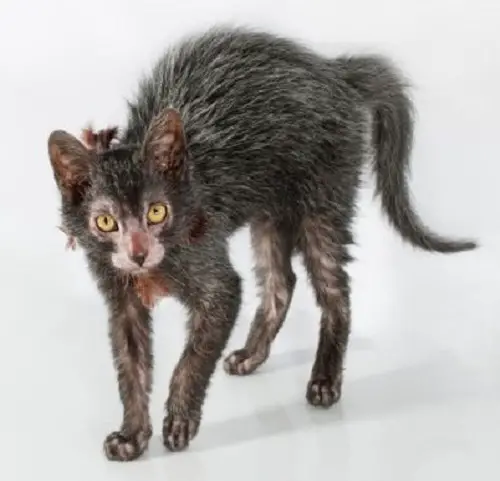
Meet the Lykoi! Yes, that “werewolf cat” on the Internet is a real kitty. The Lykoi’s patchy dark coat and hairless face are the result of a natural mutation. Don’t be fooled by their scary appearance, though. Lykois have the same loving, independent personality of their domestic shorthair ancestors. There are less than 20 Lykois in existence today. You might be able to see one in a cat show, but you won’t be able to buy Lykoi kittens until 2016.
Lykoi Cat Breeders Near You

Lykoi
- Are you a cat breeder who isn’t listed? Add your information here.
We also highly recommend checking out our latest news articles at our blog. Find information on cat health, nutrition, holistic healing, basic care, toys, and much more!
Lykoi Cat Breed Information
Lykoi History and Origins:
Lykoi cats are a 21st-century breed that began in the United States. No one knows what gene causes their unusual coat, but experts certify that the wolf-cat appearance isn’t a sign of disease. Lykois are registered with the International Cat Association as a preliminary new breed.
A healthy new breed
In July 2010, a black domestic short-haired cat in Tennessee had a litter that included two kittens with short, patchy fur on their bodies and hairless areas, especially around the faces and on the paws. The owner thought they might have the genetic mutation that makes Sphynx cats hairless and showed the kittens to Sphynx and Devon Rex breeder Patti Thomas.
Thomas notified veterinarian and cat breeder Dr. Johnny Gobble, who tested the strange-looking cats and found they had little in common with any known cat breed, including the Sphynx. Around this time, through an unrelated source, the vet learned of another litter with kittens just like these. This combination of patchy coat and hairlessness was definitely something new, but was it harmful?
Dr. Gobble and experts at the University of Tennessee and UC Davis did extensive testing that showed this unusual feline appearance isn’t an illness. It is caused by a new gene mutation that changes how the animal’s skin follicles grow hair.
The new breed was named the Lykoi, from the Greek word lykos, “wolf.” Lykois don’t have fur like a wolf, though. Their single-layer coat is normal cat hair, but thanks to the gene mutation, it’s short and thin, and there is little to no fur on the paws and parts of the face. The genetic changes to hair follicles also mean that a Lykoi occasionally sheds off all its fur and then grows it back again.
Development of the Lykoi breed
No one knows exactly what gene is responsible for the Lykoi look, but all testing shows these cats to be otherwise healthy. Dr. Gobble and other breeders are now developing the new breed, outcrossing the few Lykoi cats that have appeared so far (19 and counting) with black domestic shorthairs. This takes time. The gene is recessive, which means that even if both parents have the mutation, not all kittens will be Lykois, though they will all be registered with the International Cat Association (TICA) and end up in good homes.
The only certain way to get Lykoi kittens is to breed two Lykoi cats. Breeders hope to have Lykoi kittens available for sale some time in 2016. In the meantime, these “were-cats” will be appearing as a preliminary new breed in TICA cat shows as they move up through the cat fancy system on their way to achieve full recognition as a championship cat breed.
Size and Physical Characteristics:
Lykoi Cats |
|
Head: |
Modified wedge. Large oval eyes. Eye rims and part of muzzle hairless. |
Fur: |
Short to medium. Looks coarse but feels soft. Hairless areas feel leathery. |
Adult Weight: |
Males: 8-10 pounds. Females: 5-7 pounds |
Size/Shape: |
Medium. Long body, muscular but lithe and very well balanced. |
Legs: |
Proportionately long, sometimes hairless. Paws are oval, well knuckled. |
Tail: |
Whippy, about two-thirds as long as body. Furry and tapering. |
Voice: |
Not very talkative. Likes to purr loudly. |
Svelte but muscular Lykoi cats are heavier than they look. The fur on these sturdy kitties looks coarse, but Lykois are surprisingly soft and warm to hold.
Athletic and well built
The Lykoi isn’t as heavily boned as its domestic shorthair ancestor. Its body is long and sleek, like a Siamese, but this cat has plenty of muscle. The long legs are powerful without being bulky, and the paws usually have prominent knuckles and thick pads. Paws and legs are sometimes hairless, but the Lykoi’s long tail always has a full coat of fur unless the cat is molting.
The beautiful triangle of Kitty’s head sits on a medium-length neck that flows gracefully into the lines of the body. At first glance, a Lykoi seems to be all brilliant eyes and perky, bald ears. The oval eyes are usually gold, green, or blue. The ears are big and set high on the head. Lykois have no hair in their ears to direct sound. Instead, the cat swivels its ears when it hears something and moves its body around to point.
Lykois have very prominent, round whisker pads. The chin is strong and aligned vertically with Kitty’s leathery little nose. In profile, a Lykoi has a curved forehead, ending in a straight nose.
Roan fur and the “werecat” look
Lykoi kittens may be born hairless or with dark fur. If they have a coat, it falls out at about three weeks of age and is replaced by downy fluff. That is shed after about 14 days, when the adult coat starts coming in. It’s a roan color – it has equal numbers of dark and white hairs. Lykoi cats are the only purebred roan cats.
By the time Lykois are a little over three months old, their adult coat is all grown out. These cats will molt their coat and then grow it back again at intervals for the rest of their lives.
Black roan fur is the preferred color for Lykoi cats, but there are some beautiful blue roan or blue roan-and-white tuxedo cats around, too. The first Lykois had hairless areas that formed a mask around their eyes, nose, muzzle, and chin, and sometimes on their paws, too. This hairlessness is still a part of the standard look.
As with any developing breed, we can expect to see some slight changes in the appearance of the Lykoi breed over time.
The Lykoi’s Personality and Temperament:
 Don’t let this kitty’s appearance fool you. The Lykoi cat is no fiend. It has a gentle, loving personality and is good with children as well as with first-time cat owners. Lykois give you their hearts, but they always have a little independence. They get along well with people and other animals but can be shy around strangers at first. These little wolf-cats like to play and are very intelligent.
Affectionate but free-spirited personality
Lykois are extroverted and jolly once they get to know you. They will bond with one or two special people, yet are sociable and adaptable enough to fit into a family or just about any other type of environment, including one with resident pets.
A Lykoi can keep itself amused while you’re at work, though it will be glad to see you when you get home. This kitty prefers to sit near you rather than be held. Lykois don’t mind if you’re busy and will find plenty to do, though they always keep an eye on you. Some owners think they are clingy, but that may be due to all the attention they have gotten as a new breed. Lykois, like their domestic shorthair forebears, usually take the world on their own terms.
A smart, playful hunter
Your Lykoi will be fascinated by hunting games. Anything that can be ambushed or pounced upon will go over big, especially if Kitty can also interact with you during play. Be sure to have plenty of whirly feathers, catnip mice, bell balls and the like handy. You may even be able to train your cat to play fetch.
If you can’t find your Lykoi, look up. These cats enjoy relaxing on the highest point around, whether it is on a bookshelf or at the uppermost seat of the cat tree. Cat furniture with built-in scratching posts and detachable toys are a very good investment for this breed.
Lykois are fascinated by water, and they can figure out how to open containers. This means that you will need to make sure there is a secure cover on the aquarium if you keep fish.
Grooming and Upkeep:
It isn’t hard to groom a Lykoi, though shedding might be a problem during a molt. Lykois should have regular baths and their big ears must be checked. These cats also require routine care of their claws and teeth.
Grooming a Lykoi
A Lykoi will groom itself, and may even lick off all its fur during molting season. However, the sparse hair and bald spots mean that skin oils will build up unless you regularly wash your cat. The bathing schedule can vary from weekly to monthly, depending on the condition of the fur and skin. You will definitely have to do it weekly while the cat is molting because Kitty will get grungy if you don’t. Later on, after the coat has grown back, you can ease off on the bathing schedule.
Those huge, hairless ears pick up a lot of dirt and irritants. Check them occasionally. If they appear red or have an odor, just wipe them out gently with a cotton ball that has been dipped in feline-safe cleaner. The internal ear structures are very delicate, so never use a cotton-tipped swab for this job.
Claw and tooth care
Let’s face it. Your independent-minded Lykoi cat isn’t going to like your handling its feet or mouth, but this gentle breed will accept it, especially if it has been trained from a young age.
Cats do their own nail grooming by scratching, but this doesn’t remove all the dead layers. They need your help. Nail clipping isn’t difficult and it goes quickly with the right tools and a little practice. Ask your veterinarian for tips on how to do this safely.
All cats are prone to gingivitis, which can, in turn, cause other health problems. The vet can do a dental cleaning, but this requires general anesthesia, which is risky. It is safer, not to mention less expensive, to clean your cat’s teeth yourself. Just run a gauze-covered finger over the teeth once a week or so. You could also use a special toothbrush and cat-safe paste, which are available from the vet.
The Lykoi’s Nutritional and Exercise Needs:
 These little wolf-cats don’t require a special diet. However, like all domestic kitties, Lykoi cats are strict carnivores and must have meat to survive. They also need the right balance of fats, carbohydrates, and other nutrients. Lykois are moderately active and can easily fit into an apartment if there is enough vertical and horizontal room for them to exercise.
A complete and balanced diet
Lykois, like other cats, are descended from desert wildcats. Their metabolism is designed to get most of its energy from prey. This means a Lykoi cat has to eat up to twice as much protein as a dog does, as well as the right mixture of other nutritional requirements.
Each serving of a commercial kitten or adult cat food that follows the guidelines set by the Association of American Feed Control Officials (AAFCO) contains everything your Lykoi needs to stay healthy and happy. This is true whether it is canned or dry. The only thing to keep in mind is that cats don’t have well-developed drink reflexes and might get a little dehydrated if they are only fed kibbles. Just include plenty of fresh water in your Lykoi’s diet, and things will be fine.
For many cats, overeating is more of a concern than getting proper nutrition. Lykois are very muscular, and their bodies should be firm and lithe, not chubby. If your cat is packing on the pounds, just get the toys out a bit more often for exercise and watch how much food you serve.
Exercising your Lykoi
A Lykoi may lounge around much of the time, but this breed is lively by nature and really likes to play, either by itself or with its favorite people. Lykois have strong hunting instincts and will enjoy any games that involve chasing, stalking, pouncing, and ambushing. These intelligent cats like puzzles and other challenges, too.
Lykois like to get up high and survey their domain. A ceiling-high cat tree or other pet furniture will keep them off your curtains and cabinets. A window seat will give your Lykoi a chance to exercise as it jumps up there, as well as a “television” where it can watch everything going on in the outside world.
Your Lykoi may be independent, but it wants to please you, too. With just the right amount of attention and affection, you can keep Kitty healthy and happy for many years.
Unique Lykoi Characteristics:
No other cat has the lycanthropic appearance and roan fur of a Lykoi cat. Genetics is the reason for this breed’s patchy fur and very unusual coloring.
The Lykoi gene
The first Lykois appeared as natural mutations. Since breeding programs began, a total of 12 natural mutations like the Lykoi have appeared around the world.
Scientists aren’t sure what gene causes the remarkable Lykoi coat. Because the fur changes after Lykoi kittens are born – that is, after they leave a very warm place for a cooler environment – it is suspected that one of the temperature-sensitive genes is involved, like those that cause dark fur pointing on a Siamese. On Siamese cats, cooler areas like the face and tail are darker. On Lykois, similar cool areas are hairless.
Natural mutations like the Lykoi may often happen out in the wild, but these are quickly weeded out. Such a partial coat leaves the animal vulnerable to cold, and when its fur camouflage molts off, exposed to predators. As a domestic pet, Lykois don’t have these problems. They can be kept warm and safe indoors, so the natural Lykoi gene mutation is being encouraged by humans through breeding programs.
A roan coat
Genetics also plays a big role in the color of a cat’s coat. Believe it or not, up to seven different genes cause the rainbow of cat colors we see around us today.
Lykois have a gene that masks color (causing a white hair) and one that makes a hair black. Sometimes there is a third gene that dilutes the black into blue. This genetic mix gives the adult Lykoi cat a roan coat – an equal mix of white hairs and solid colors (black or blue). Horses and dogs have that pattern, but not any other breed of cat.
Health and Wellness:
Veterinarians, dermatologists and other experts did a lot of testing before Lykoi cat breeding began. They found no hereditary health concerns. However, Lykois are very new, and it’s too soon for anybody to know what the future may hold. These lively cats seem robust so far, and only need routine core immunizations.
Lykoi health
In any other cats, patchy fur and bald spots would be a sign of disease. This is why veterinarians initially looked for skin problems and other illnesses before giving the okay for Lykoi cats to be bred.
So far, no specific health problems have shown up, though Lykois may be prone to sicknesses that any cat might get. They do face the same problems with skin oil buildup, keeping warm, and sunburn that other hairless breeds have. There are also those who feel that it’s wrong to intentionally breed animals with altered fur like Lykois.
The oldest Lykois today were born in 2010. Some chronic health concerns don’t show up until a cat reaches seven years or more. It is too early to say for sure what the health outlook is for the Lykoi cat breed.
Routine wellness care
All cats must have a series of core vaccinations that protect them from feline distemper (parvovirus or panleukopenia) as well as two severe upper respiratory infections (FHV-1 and FCV). Sometimes all three are combined into a triple vaccine. Once the first set of immunizations has been administered, your Lykoi will only require a booster every one to three years, depending on the vaccine.
Rabies is considered a core vaccine in the United States and other areas where the disease still exists. Local laws vary so check with your vet about this vaccine.
Other feline vaccines exist but your Lykoi cat might not need them. It depends on factors like whether the Lykoi is exposed to other cats or whether you will be breeding it. Again, talk this over with the vet and see what the recommendation is for your individual cat.
Interesting Facts About Lykois:
- The first intentionally bred Lykoi cat was born in September 2011. She is named Daciana Dream.
- Outcrosses to domestic shorthairs are allowed, but not to any registered breed.
- For Lykois to be registered as a championship breed with the International Cat Association there must be at least 200 cats living. At last count, there were only 19 Lykois. However, Lykois can still appear at cat shows in the Preliminary New Breed category.