Welcome to our Highlander Cats page! Here you will find everything you could ever want to know about Highlander cats and a complete list of all the Highlander catteries we have located in the USA.
Wouldn’t you love to own a gorgeous, gentle cat whose appearance stops visitors in their tracks and makes them ask why you have a pet bobcat? Then the Highlander cat is for you! This fun-loving and sociable show-off will also enjoy the extra attention from your guests.
Highlander Cat Breeders Near You

Highlander
- Are you a cat breeder who isn’t listed? Add your information here.
We also highly recommend checking out our latest news articles at our blog. Find information on cat health, nutrition, holistic healing, basic care, toys, and much more!
Highlander Cat Breed Information

Believe it or not, the Highlander cat has no wildcat DNA, so you don’t need a license to own one. Whether its coat is long or short, a Highlander is a big, sweet-natured cat, with no breed-specific health problems. Highlanders are active and fit well into a busy family home. They do need some training because of their size, strength, and agility.
History and Origins:
It all started in 1993, when US breeders crossed the Jungle Curl with the Desert Lynx. Don’t be confused by the latter breed’s name. The Desert Lynx they used was a hybrid domestic cat, not a bobcat. Early advertisements that this hybrid was part bobcat weren’t true. DNA testing shows no bobcat genes whatsoever in the Highlander cat. The Desert Lynx actually brought the Highlander genes from domestic breeds like the Pixie-Box, Maine Coon, and Manx. The Jungle Curl, of course, gave the Highlander cat its pretty ears.
In 2004, after further crossing with some other Curl breeds, the new Highland Lynx breed was announced (its name was changed to Highlander a year later). It may not have a single wild gene, but the resemblance to a bobcat is amazing. The Highlander cat is as gentle and friendly as any other domestic cat. The International Cat Association was especially impressed by its curly ears and recognized the Highlander shorthair and Highlander longhair as a preliminary new breed in 2008. The World Cat Federation has also preliminarily admitted Highlander longhairs and shorthairs.
The Highlander cat breed is still under development today. Breeders are crossing Highlanders with domestic longhairs and shorthairs that don’t already belong to a registered breed. The curly-eared kittens are then registered as either Highlander Shorthairs or Longhairs, based on their coats.
Size and Physical Characteristics:
| Highlander Cats | |
| Head: | Wide, shaped like an inverted pear. Top third of ears usually curled. |
| Fur: | Can be long or short. Very soft and silky. All colors, also tortie or tabby pattern. |
| Adult Weight: | Males: 15 to 20+ pounds. Females: 10 to 14+ pounds. |
| Size/Shape: | Medium to large. Very muscular. Rectangular body sits high on the legs. |
| Legs: | Medium long. Powerful haunches. Big paws. Front paws may have extra toes. |
| Tail: | Stubby, 1-6 inches long. May be kinked or curled. |
| Voice: | Fairly quiet, but individuals may be chatty. |
A Highlander cat brings the look of the wild into your living room, showing off its powerful muscles, big paws, and spots and stripes on its coat. But your Highlander shows its true nature by clowning around playfully or snuggling up next to you on the couch, purring.
Head and body
The first thing you notice about a Highlander cat is its wide, square muzzle and sloping forehead. A Highlander’s eyes are usually gold or green, and white cats have blue eyes. All Highlander kittens are born with straight ears. Most of the time, the top third of each ear begins to curl at around two weeks of age. An adult Highlander cat has medium to large ears that are firm at the base and flexible at the tips, which have a relaxed curl up to 90 degrees. Sometimes the ear tips line up over the top of the cat’s head. Many Highlanders also have ear tufts.
Highlanders have a boxy body shape, with heavy boning and deep, muscular shoulders and flanks. Their athletic legs look longer than they really are. The hind legs are slightly longer than the forelegs, but Highlanders walk with the back legs slightly flexed so their back remains straight. This cat’s paws are big, with obvious knuckling. A distinctive feature of the Highlander cat is polydactyly – extra toes on its front paws. Its tail is naturally bobbed. For show, the tail nubbin must be at least 1 inch in length, and a “long-tailed” Highlander cat may be wagging as much as 6 inches of its furry stub when it rushes over to greet you when you come home.
The Highlander coat
The cat fancy sometimes talks of the “Highlander cat breed group,” meaning Highlanders with either short or long hair. Most pictures of these lovely animals show the shorthairs, because they bear an eerie resemblance to the wild lynx. Don’t overlook the furry beauty of a long-haired Highlander, though! The silky, dense fur on a longhair is really just a couple of inches in length, with a bit more on the tummy.
There are solid-colored Highlanders, but usually this cat usually has some sort of a tabby pattern, even when it has color points (darker fur on the face, ears, paws, and tail tip) and combination of colors such as blue, sorrel, fawn, chocolate, lilac, red, and cream. Highland Longhairs often have long tufts of fur between their toes.
Highlander Personality and Temperament:
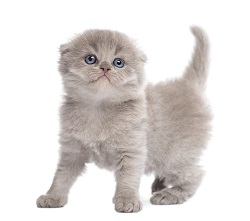 These playful giants are intelligent and love being around humans, so they can easily be taught how to play nice. The affectionate Highlander wants nothing more than to please you. Once it learns the rules, your Highlander cat will get along well with children and other pets. This breed adapts well to the hustle and bustle of family life but needs a devoted owner and lots of interaction.
Playtime is mandatory
Highlanders have plenty of muscle because they are constantly in motion exploring their world, playing with toys, jumping up onto things, playing with you, rollicking around the house with the kids or with other resident pets, and playing by themselves.
Highlanders are so persistent, they can wear out other pets. Also, their size and agility may lead to accidents if these cats don’t learn the house rules. Don’t fear them. Highlander cats always mean well and are as smart as they are loving. You just need to set boundaries at the outset and train them to be gentle.
A lot of love in a big package
It was no exaggeration up above that your Highlander cat would wag its tail as a greeting; the Highlander is always glad to see you. Its world is centered on its human family. As well, this cat will happily learn how to fetch, walk on a leash, or do many other tricks.
What the Highlander asks in return is lots of affection and attention. This cat’s striking appearance is very attractive, but it’s also a high-energy pet that thrives on plenty of personal interaction. When you are considering a Highlander cat as a pet, be sure to ask yourself if you want a quiet lap cat, or the lively, interactive clownishness of the Highlander cat breed.
Grooming and Upkeep:
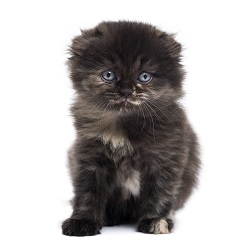 Surprisingly, even Highlander longhairs are low-maintenance pets thanks to their thick, resilient coats. They don’t shed much, either. Check their ears during each grooming session, and prepare to spend a bit more time trimming nails on the polydactyl Highlanders. Your Highlander cat also requires regular dental care, which can be done either by you or by the veterinarian.
Grooming tips
Your Highlander shorthair can groom itself. Just comb it out and brush the fur every now and then to distribute oil through the coat and remove dead hair, especially in the spring and fall. More frequent grooming will cut down on hairballs, and your cat will enjoy the extra attention. A Highlander Longhair cat should be groomed more often.
The Highlander cat loves water and thinks nothing of joining you in the bathtub or shower, but it prefers to get wet on its own terms. It’s a good idea anyway to start training this big, powerful hunk of feline affection to accept a bath from you while it’s still young.
This cat breed tends to get waxy buildup in its ears. Just check the ears for redness or an odd odor every now and then. Don’t use cotton swabs on those delicate inner ear structures. Dip a cotton ball in a cat-safe cleaner, or ask your vet for some drops, and then gently wipe out the ear.
Nails and teeth
Most cats have 18 toes – five on each front paw and four each on the back paws. This is also true of many Highlander cats, but some have as many as seven toes on each front paw. This phenomenon is called polydactyly. It disqualifies the Highlander from cat shows but makes no difference in its walking, jumping, or other behavior. It does increase the likelihood of accidental scratches during playtime, though, so you should diligently trim Kitty’s claws every ten days or so.
Yes, you have to do grooming on the claws of a big cat that looks like a lynx. Just remember a Highlander is actually a gentle, loving animal with the peaceful nature of a domestic cat. Claw clipping goes quickly and easily with the right tools and a little experience, especially if you train Kitty for it at a young age. The veterinarian can give you tips on what clippers to use and how to do this efficiently and safely.
While you’re at it, check the teeth. Cats use their teeth a lot and are prone to gingivitis. They don’t need brushing after every meal, but you should run a gauze-covered finger over the teeth or use a toothbrush with cat-safe toothpaste on it about once a week. The vet can give your Highlander a dental treatment, if you prefer, but it involves general anesthesia, which is risky. You can protect Kitty’s health and save money by doing it yourself. And just imagine how cool it will look to your friends!
Highlander Nutritional and Exercise Needs:
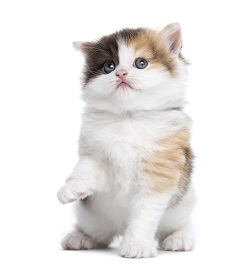 Haggis is optional. Playtime is not.
Highlander nutrition
The Highlander cat may not have any bobcat DNA, but like all domestic cats it is descended from desert wildcats that got all their nutritional needs and hydration from their prey. This is why house cats are strict carnivores – they must have meat to survive.
Your Highlander’s body is designed to get more energy from protein than from carbohydrates, though it needs some of those, as well as a little fat. Kitty needs more protein in its diet than a dog does, so never feed dog food to your Highlander cat. Kitty also needs taurine, an amino acid in protein that cats can’t make for themselves very well, as well as the right balance of vitamins and other nutrients.
In the US, commercial cat foods labeled “complete and balanced” meet standards set by the Association of American Feed Control Officials (AAFCO). European manufacturers also follow this nutrition standard. The AAFCO bases its standard on either feeding trials or nutrient profiles (there are two profiles, one for kittens and one for adults). Check the label and give your Highlander cat the exact nutrition it needs.
The Highlander’s desert wildcat ancestors of long ago got all the water they needed from prey. This is why domestic cats don’t always drink enough, even when they need to. This isn’t a problem if your Highlander will eat canned food, which contains the same amount of water that prey would. However, if only kibbles will do, just be sure to offer fresh water all the time. Your cat may get a little dehydrated, but it will drink enough to live and be healthy.
Exercise needs
Highlanders have a lot of energy to burn off, but they’re not frantic about it. This is a good thing, given their size and athletic abilities.
The Highlander is smart enough to figure out how doors and drawers work. Cats with extra toes on their front feet will also be that much more dexterous when it comes to turning and pulling handles. Finally, small, prey-like pets like birds, hamsters, or fish will trigger the hunting instincts in a Highlander. You can cat-proof your home by using locks, not only on doors and drawers that humans use but also on the doors of your small pets’ cages and your aquarium lid.
Again, a Highlander doesn’t know what is right and wrong behavior until you tell it. Just be loving, gentle, and firm, and also be consistent and Kitty will quickly learn how to get along as it prowls and races around the house.
These muscular cats love to stalk, bat around, and pounce on toys, but they’re rough. Use durable toys that can take lots of abuse from this cat’s hefty weight and lightning strike. Keep a few extra feather wands handy and plenty of bell balls. These toys are fascinating but they are too flimsy to last long with a Highlander cat after them.
Finally, a Highlander cat is big and likes to run around. It needs a bit more stopping room than smaller breeds. This cat also likes to use its powerful hind legs and will jump up onto any height it sees. If you get a cat tree for your Highlander, go for the ceiling-high model and make sure it is secure enough to handle the cat’s weight when it lands after a running jump.
Characteristics Unique to Highlanders:
Highlander cats are popular because of their big-cat appearance and their curly ears, but they are gentle giants, too. This is rare in the cat world.
A “lynx” with curly ears
The Highlander was developed to resemble the bobcat in every way but the ear curl. Because both long- and short-haired domestic cats were used in breeding programs, not every Highlander looks exactly like a wild lynx. However, every Highlander cat is big, muscular, and has either a bobbed tail or no tail at all.
So, why did they add in the curled ears? Because it’s adorable! Too, research done on the American Curl cat has shown that the genetic mutation that makes ears curl doesn’t cause other health problems.
Highlanders look wild but are docile
The Highlander has no wildcat in its pedigree. In addition, a lot of selective breeding has been done over the last two decades to make sure that these big cats truly are easygoing and obedient – well, as obedient as any cat can be. The phrase “herding cats” doesn’t refer to a quiet school trip. A Highlander can be just as independent and stubborn as any other house kitty, but it is bigger and stronger than many other breeds. Carefully and consistently train it to get along and go along with everybody, human and pet, in your home.
Health and Wellness:
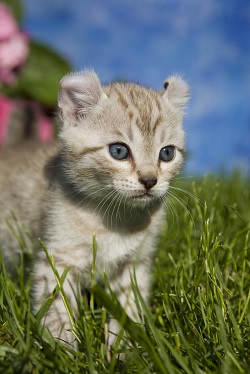 Great news! Highlander cats have no breed-associated health problems, as far as we know. Of course, they can get any of the diseases domestic cats are susceptible to, so vaccinations are a good idea (and some are probably required by law where you live).
Highlander cat health issues
Breeders have been working since 1993 on the Highlander, but the modern cat is a relatively young breed. No genetic diseases or congenital health problems that would show up in kittens or young adults have been found. Other diseases sometimes only appear later in life. Right now no breed-specific illnesses have been found in aging Highlanders. Let’s hope it stays that way, and that this breed stays just as healthy as it is beautiful.
Highlander cat vaccinations
Every domestic cat should get core vaccinations against two upper respiratory infections, as well as feline distemper (this deadly disease is sometimes called panleukopenia or parvovirus). Sometimes all three immunizations are combined as a triple vaccine. Whether your Highlander cat gets three separate vaccinations or just the triple vaccine, it should be immunized while young, although adults can get core vaccinations, too. A female cat shouldn’t be vaccinated while she is in heat.
Core vaccines are given as a series over about ten weeks. After that, your Highlander will just need a booster either annually or every three years, depending on the vaccine.
Rabies is a core vaccination in places like the United States, where the disease is endemic. The rabies schedule depends on local laws. Check with the veterinarian about what is required where you live and where you might be traveling with your Highlander cat.
There are lots of non-core vaccines available, too, but not all cats need them. It depends on such things as whether the Highlander is exposed to other cats, whether it will be bred, and so forth. Again, your vet knows exactly what is best for your Highlander.
Interesting Facts About Highlander Cats:
- Polydactyl Highlanders are sometimes called by the old name for this breed – Highland Lynx.
- When two polydactyls breed, it is possible that both polydactyl kittens and kittens with the normal number of toes will be born.
- Some breeders call solid white Highlanders Alpine Lynxes. Again, there is no bobcat DNA in any Highlander or in the cat breeds it was developed from.
- It takes three to four years for a Highlander cat to fully mature.
- Thus far, Highlander cats typically live into their teens.