Welcome to our Havana Brown Cats page! Here you will find everything you could ever want to know about Havana Brown cats and a complete list of all the Havana Brown catteries we have located in the USA.
The history of the rare Havana Brown is a New World success story. Havanas crossed the Atlantic, struggled for a while, and then made the big time, leaving their Old World relatives behind forever. Havana Brown cats are very healthy. They make great pets as well as show cats.
Havana Brown Cat Breeders Near You

Havana Brown
- Are you a cat breeder who isn’t listed? Add your information here.
We also highly recommend checking out our latest news articles at our blog. Find information on cat health, nutrition, holistic healing, basic care, toys, and much more!
Havana Brown Cat Breed Information
Havana Brown History and Origins:
British roots of the Havana
Some of the first cats imported from Siam were solid brown. At first British cat enthusiasts praised their combination of sleek foreign lines, brilliant “greeny-blue eyes”, and a rich chestnut coat. A solid brown Siamese won a British cat show in 1888.
However, fashions change over time. The cat fancy soon moved toward the Siamese look that we’re familiar with today. In 1930 the British Siamese Cat Club rejected any eye color but blue. This effectively ruled out brown individuals, which usually had green eyes. During World War II, most of the solid brown Siamese breeding stock disappeared.
In the 1950s some cat fanciers decided it was time for a revival. They formed the Havana Group (probably choosing the name because the Havana rabbit breed has the same medium dark brown fur these breeders were aiming for). The group succeeded. They bred seal point and chocolate point Siamese cats with black shorthairs that also had the gene for chocolate color, occasionally mixing in a few Russian Blue cat genes.
In the mid and late 1950s, breeders brought some of the new Havana cats to the United States, while the successful breeding program continued back home. In 1958, the Governing Council of the Cat Fancy (GCCF) recognized the new breed, although they renamed it the Chestnut Brown Foreign, possibly because of some concern that the name “Havana” was associated with the fur trade. The US-based United Cat Federation (no longer in existence) recognized the Havana Brown in 1959. The Cat Fanciers Association (CFA) first allowed the Havana Brown to compete for show championships in 1964.
Everything seemed to be going quite well for Havana Browns, except for the different name in the UK. Then US breeders reported that a lot of foot deformities were appearing in Havanas descended from the original British stock. As a result, many breeders on both sides of the Atlantic lost interest in the breed.
Then, in 1967, a solid-brown Siamese kitten named Scintilla Copper Beech was born in the UK. Her good looks renewed efforts to develop a chocolate-colored cat with the extreme look of the Siamese. Today’s Havana variety of the GCCF-registered Oriental Shorthair breed is descended from Scintilla Copper Beech.
A New World cat breed
Meanwhile, what was going on in North America? A few breeders were still devoted to the Havana Brown. They liked the original look better than the Siamese appearance that UK breeders were now pursuing.
Breeders kept the Havana Brown’s original appearance in mind while working to eliminate foot deformities from the breed. They eventually succeeded. By 1989, the once-popular Havana Brown was healthy, but there were only 130 breeding individuals.
This cat is a survivor. It also helped that the Cat Fanciers Association allowed limited outcrossing, starting in 1998. Since then, the Havana Brown has made a terrific comeback, although purebreds are still very rare. In 2013, Havanas placed well up in the CFA’s list of the top fifty most popular cat breeds.
Size and Physical Characteristics:
| The Havana Brown | |
| Head: | Slightly longer than it is wide, with round muzzle and prominent whisker pads. |
| Fur: | Short to medium. Silky mahogany brown or lilac/lavender. |
| Adult Weight: | Males: 8-10 pounds. Females: 6-8 pounds. |
| Size/Shape: | Medium. Body moderately long, muscular, sleek and rounded. Not extreme. |
| Legs: | Long, slim but not delicate. Hind legs slightly longer than forelegs. |
| Tail: | Medium in length. Slender and tapering, not very whippy. |
| Voice: | Soft voice. Some individuals can be chatty. |
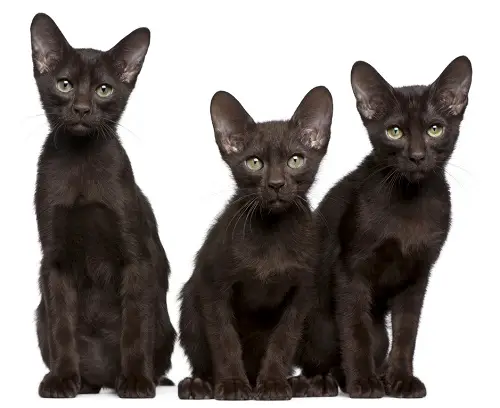
The Havana Brown is a medium-sized cat. Everything is moderate in this kitty except for the unique light-bulb shape of the face, its big ears, and its sleek, solid-colored coat.
Head and body
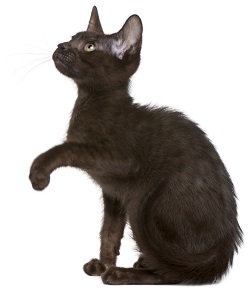
No other domestic cat’s head looks like the Havana Brown’s. This cat’s face really is shaped like a light bulb! Seen from the top, it’s a bit longer than it is wide, but when this cat is facing you, its wide-set oval eyes make the head appear very broad above the cheekbones. Havana Brown eyes are usually a brilliant green. The cat’s muzzle is round and rather narrow, but full whisker pads on either side make it plumper. Seen in profile, the muzzle ends abruptly, with a prominent chin.
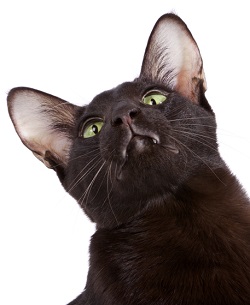
Havanas have big ears that are tilted slightly forward. There is very little hair on or inside the ears. The head sits on a medium long neck that blends nicely into the cat’s trim, muscular body. No one feature stands out in their build; Havana Brown cats look like balance and grace personified. The body does sit high on the legs. The hind legs are a little longer than the forelegs, and the paws are neat little ovals. This cat’s tail is medium long, slender, and slightly tapered.
The Havana Brown coat: chocolate and lilac
Breeders have worked hard to develop the richly colored coat that, together with the uniquely shaped head, makes Havanas famous. Pictures don’t do it justice.
The exact hue of the medium-dark brown Havana Brown fur is up for debate. Some call it mahogany brown, others say chestnut. There are lilac-colored Havanas, too. In cat coat genetics, lilac (or lavender) is considered to be diluted brown. Both colors are beautiful, but they only really matter if you are going to show your Havana. The Cat Fanciers Association, which calls the breed the Havana Brown, doesn’t accept the lilac color. The International Cat Association, which calls the breed the Havana, accepts both colors.
Whether brown or lilac, the Havana Brown’s glossy coat is short to medium in length. Every hair is a solid color, giving the cat a very smooth, rich appearance. Havana Brown kittens sometimes show ghost tabby markings, but these fade as the cat matures.
Havana Brown Personality and Temperament:
 Havana Brown cats are a bit livelier than most shorthairs, at least when they’re not snoozing happily in the sun. They are intelligent and adaptable, and curious enough to run towards, instead of away from, a sudden loud noise. This breed is very affectionate. Havanas usually bond closely with one or two special people, but they also get along well with other family members and resident pets.
Moderately active and smart
It’s fun to sit back and enjoy the beauty of a lounging Havana Brown. Treasure the moment, for Kitty will soon be up and active, checking out what’s going on and sticking its nose and paws into everything. These cats are curious, and it doesn’t take them long to figure out how doors, drawers, and light switches work. Havanas have a mischievous streak, and they aren’t above playing tricks on you. All in all, it’s a good idea to child-proof your home when one of these cats moves in.
This intelligent cat will figure out its place in your home’s social hierarchy and then act accordingly. The Havana adapts well to almost all home situations. It’s easy to train this quick-witted feline. Children love it because of its beauty and playfulness. After careful introductions, the cat will get along well with other pets, too.
A loving friend and companion
The fun-loving Havana Brown isn’t above playing tricks on you, but it’s generally a well-behaved cat. Havana cats may keep a first-time cat owner busy, but they make wonderful pets. They require more interaction than just feeding and grooming, but it’s always a two-way street.
Like their domestic shorthair ancestor, Havanas can entertain themselves, but they do get lonely when left alone too long. If your schedule keeps you out of the house frequently, consider getting another pet to keep Kitty company.
Grooming and Upkeep of the Havana Brown:
The Havana Brown is a low-maintenance cat. It doesn’t shed very much You will just need to brush its coat occasionally and take care of its ears, claws, and teeth.
Grooming tips
Your Havana Brown cat does its own grooming. Just brush out its silky fur once a month or so to remove dead hair and distribute oil. Kitty won’t mind extra grooming, if you feel like it. Doing this will also cut down on hairballs. A bath shouldn’t be necessary unless you plan to show your Havana. Instead, you can just wipe that beautiful coat with a piece of silk or a chemical-free chamois to make it shine. To really show off your Havana Brown, bathe it using one of the color-enhancing feline shampoos.
Those large, cup-like ears tend to pick up a lot of dirt and other irritants. Check them during a grooming session. If there is any redness or an off odor, then just wipe them out gently with a cotton ball that has been dipped in some cat-safe cleaner.
Claws and teeth
All cats groom their nails by scratching, but this doesn’t remove all the dead layers. You will have to do that by keeping the nails trimmed. Your veterinarian can show you how to do that safely and what the best tools are. If you have never done it before, it might seem scary, but don’t worry. Havana Brown cats are docile, and the job goes quickly once you have the right clippers and a little experience.
You should also run a gauze-covered finger over your Havana’s teeth every now and then, or use a toothbrush and cat-safe toothpaste. It doesn’t have to be done after every meal, but set a regular schedule for it every ten days or so. This will reduce the likelihood your Havana will get gingivitis. The vet can do it, but dental treatment requires general anesthesia, which is risky for the cat. Some pet food manufacturers claim that their kibbles clean teeth, but this has never been verified.
Nutritional and Exercise Needs:
 Speaking of food, all house cats, including the Havana Brown, need more protein in their diet than dogs do. They must also eat just the right balance of fat, carbohydrates, and other nutrients. Havana Brown cats may do occasional wind sprints for exercise. However, they generally keep themselves trim by batting things around, climbing, and playing with you.
A strict carnivore
Havanas and all of their domestic cousins are carnivores and burn protein for energy. Fortunately, it’s not difficult to give your Havana Brown the right diet. Look for a commercial product that meets Association of American Feed Control Officials (AAFCO) requirements. Before labeling food “complete and balanced,” the AAFCO either does feeding trials or checks it against nutrient profiles. There are two profiles – one for kittens and one for adults.
If you have other cats, it might be a good idea to feed them separately. Frankly, the Havana Brown gets quite greedy at chow time and will empty other dishes as well as its own! This tendency to overeat also makes Kitty more prone to obesity. Watch serving size and making sure your Havana gets plenty of exercise.
Room to exercise
Havana Brown cats keep themselves in shape with lots of activity, but they do well in apartments that offer some room to move. Since they like to use their paws, a favorite game involves smacking things around. Your Havana may even hide its toy away for another day. Puzzle games that reward the cat for thinking are always popular. So are hunting games like string feathers and laser dots. These let Kitty use its powerful hind legs to jump around and pounce.
Havanas love to climb. Pet furniture, especially a ceiling-high tree, is a good alternative to cabinets and curtains. The cat gets to work out and also has a nice high place where it can relax and survey its territory.
Characteristics Unique to the Havana Brown:
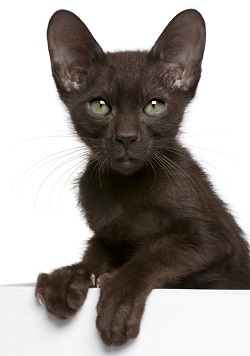 Once you have seen the Havana Brown cat, you will never forget its unique head shape and lovely fur. This is also one of the rarest breeds in the world, with only about a thousand Havanas in existence today.
The head and fur
A domestic cat’s head is usually round, wedge-shaped, or somewhere in between. The Havana Brown has a rather angular upper face, but its unusual muzzle makes it look as though Kitty is puckering up to give you a kiss. Some people think it looks like a furry little corncob on the cat’s face. The Havana’s profile breaks at the eyes. There’s an illusion of squareness to the round muzzle in the side view, thanks to a strong chin. This is especially true when the chin and the tip of the nose line up perpendicularly to the muzzle.
Havana Brown cats have a “self” coat – this term just means that the cat is all one color, and each hair is solidly colored. There are generally four self colors: chocolate, black, cinnamon, and red (not white – when it comes to cat genes, white is a masking effect rather than a true color). To get the chocolate color, Havana Brown cat breeders have had to be selective and keep a close eye on the dominant and recessive genes in each breeding cat. It wasn’t easy! After they succeeded, some breeders went for lilac, which is a “washed out” genetic dilution of brown.
A rare breed
As we have seen, the Havana Brown cat started out on both sides of the Atlantic. Then a foot deformity issue arose. As a result, UK enthusiasts eventually turned toward a more foreign shorthair look, while many North Americans lost interest in the Havana. The few that kept the Havana Brown going had a very small gene pool to work with.
Havana Brown breeders eliminated the hereditary foot problem and they succeeded in getting the Havana recognized by the Cat Fanciers Association. However, some say today that the association closed the breed to outcrossing too early, only ten years after accepting the Havana Brown for championship competition. This reportedly led to inbreeding and a decline in numbers. After 24 years, the Cat Fanciers Association did allow limited outcrossing, Ever since then, the Havana Brown has been making a comeback, but it is still one of the rarest cat breeds in the world.
Health and Wellness:
 Havana Brown cats are overall healthy and no longer have foot problems. However, they do get bladder stones a little more frequently than most other breeds and may also be prone to hemophilia. Like all house cats, the Havana Brown should get core vaccinations as well as any other immunizations it might need.
Bladder stones and hemophilia
Thanks to its shorthaired ancestors, the Havana Brown is a very healthy cat breed. Some Havanas have developed calcium oxalate bladder stones. These stones may not cause any symptoms, but sometimes, especially in older cats, they lead to infections and bladder irritation. Not all Havana Browns develop bladder stones, but when they do, it can often be controlled with diet.
Some veterinarians note that the Havana Brown is a little more prone to hemophilia than most other breeds. This happens so rarely in Havanas that the disease often isn’t listed as one of the breed’s health issues. If you are concerned about this, talk it over with your veterinarian.
Feline vaccinations
Mother’s milk contains antibodies that protect Havana Brown kittens during their first few weeks of life. After that, they will need to be vaccinated against feline distemper and two severe types of upper respiratory infection – FCV and FHV-1. These core vaccinations are given to kittens or adults as a series over ten weeks. After that, your Havana Brown cat can just receive boosters every one to three years, depending on the vaccine.
In areas, like North America, where rabies exists, this is also considered a core vaccination. The laws regulating its use vary from place to place. Your vet will be able to tell you what is appropriate where you live and where you will be traveling with your Havana Brown.
There are other vaccines, including one for feline leukemia, but not all Havanas need them. It depends on factors like whether your cat will go outside or will be bred. Check with the vet to see what non-core vaccinations your cat might require.
Interesting Facts About the Havana Brown:
- Havana Brown cats are the only purebred that must have whiskers of a specific color. Whiskers must match the coat color, either chocolate or lilac.
- Most Havana Browns have green eyes.
- In the UK, Havana is a color variety in the Oriental Shorthair breed. North America’s Havana Brown is a completely different breed.
- The Havana Brown is the first cat breed to be named after its coat color.