Welcome to our European Shorthair Cats page! Here you will find everything you could ever want to know about European Shorthair cats and a complete list of all the European Shorthair catteries we have located in the USA.
The European Shorthair is a rare cat breed, not often found outside of Sweden and Finland, and it is relatively new in terms of being well-established as a breed. Their loving, relaxed temperament is sure to win your heart.
European Shorthair Breeders Near You

European Shorthair
- Are you a cat breeder who isn’t listed? Add your information here.
We also highly recommend reading checking out our latest news articles at our blog. Find information on Cat health, nutrition, holistic healing, basic care, toys, and much more!
European Shorthair Cat Breed Information

General Information:
Height/Length: 10-14 in.
Weight: 8-15 lbs.
Lifespan: 15+ years
Coloring: Variety
Area of Origin: Italy; Sweden
Similar Breeds: American Shorthair, British Shorthair, domestic breeds
Breed History and Origins:
 Sometimes called Celtic Shorthairs, European Shorthairs are descended from the cats that spread across the European continent with the Roman Empire. Soldiers brought shorthaired cats along to help protect their grain from mice and other pests. Kittens born along the way often ended up in local villages across Europe, where they continued their ratting traditions and interbred with the wild cats already present. Many of these cats had tabby patterns that helped them blend into their surroundings. During the Middle Ages, European Shorthairs’ ancestors helped to stave off the Black Plague in many families by hunting the rats that carried the disease.
These cats flourished across Europe—particularly because, in addition to their excellent mousing abilities, they were warm and loving lapcats. In Britain, they were developed into both the British Shorthair and, later, the British Longhair. These cats exhibit much more Persian-like traits than their European counterparts, such as a short nose and round face. European Shorthairs, as a breed, began their development in 1925. The current looks of the breed, however, are owed to the Swedish and other Scandinavian breeders who began to breed European Shorthairs to a more historical look. They desired to bring back the stocky tabby mousers that had spread across Europe so many centuries before. This breed has not yet been recognized by any North American fancy associations, but the Fédération Internationale Féline (International Feline Federation) recognized the breed in 1982. The World Cat Federation has accepted this breed under the name Celtic Shorthair.
Size and Physical Characteristics:
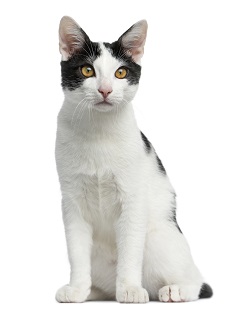
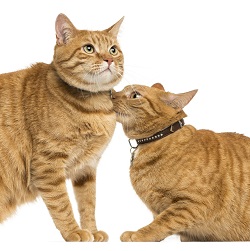 The European Shorthair is a medium-to-large sized cat, with a sturdy, robust build without appearing cobby. Still, these muscular cats are more stocky in structure than either the British or American Shorthair. They have rather large heads that are not quite round. Their upright ears are medium-sized and a little rounded, possibly with tufts on the end of them. The European Shorthair’s eyes are a little on the small side for its face, giving it a shrewd expression. These eyes come in a great variety of colors, including green, amber, and blue.
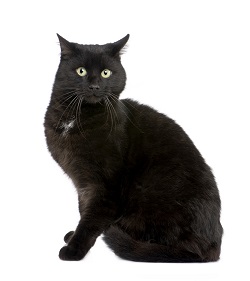
The Shorthair’s coat, as the name implies, is short, but also thick and dense to protect the cat from weather and injury. It tends to be a little rougher than the coats of other shorthaired breeds. You can find a large number of fur colors and pattern combinations. Tabbies of all colors are some of the most popular, as are solids in white, cream, red, blue, and black. Tortoiseshell patterns are also possible in black and blue, as is harlequin coloring—that is, a mostly white cat with a few patches of another color.
Personality and Temperament:
Since the European Shorthair is not incredibly well-established as a breed, a steady personality type has not yet solidified. However, being descended from a type of cat that has existed since ancient times, it is possible to make some generalized comments about how most Shorthairs act. This breed is usually more relaxed in nature than random-bred cats, but still loves to roam outside on the hunt. These cats love to bring home “gifts” for their human companions, usually in the form of a dead mouse or bird.
These cats are usually quick to adapt to a new situation, but when they meet new people they can be standoffish. They are usually very dominant cats, so they may not get along well with other animals in the house that refuse to submit to its iron paw rule. The key to avoiding a bad relationship between your current pets and new pets is to arrange a meeting between them before making a commitment.
European Shorthairs get along famously with humans of all ages. They are very loving cats, and their favorite spot to sit will probably be a person’s lap. Being an active breed, European Shorthairs will run around the house—and the garden if you’ll let them—to let out their energy. To avoid destructive behavior, you can provide a bright Shorthair with a puzzle toy or mouse toy.
Nutritional and Exercise Needs:
 This breed does not require any special diet, but high-quality food is a good recommendation. Although the cats have not been noticed to be prone to overeating, owners of European Shorthairs should make sure not to overfeed their cats. It has become common practice in many households to keep the food dish filled at all times, but this often leads to obesity—and the host of health problems that accompany it. All cats ought to be fed an appropriate amount for their weight and age.
As a fairly active breed, European Shorthairs need a good amount of exercise. While cat trees and toys will give the cat something to do while you’re away, nothing beats a good game of chase-the-laser to keep the ounces off of your cat’s waistline.
Grooming and Upkeep:
Basic grooming is necessary for the European Shorthair—that is, monthly care for its ears and weekly attention to its nails and teeth. Other than that, this breed’s short coat is very easy to care for. Weekly brushings with a curry brush should remove dead hairs from the coat while giving it a beautiful shine.
Characteristics unique to the breed:
In European Shorthairs, it is not uncommon for them to be odd-eyed—that is, for a single cat to have two differently colored eyes. According to the FIFe standard, the only acceptable odd-eyed coloration is one blue eye and one amber eye.
| Advantages | Challenges |
| Very few hereditary health issues | Somewhat rough coat |
| Simple grooming | Personality is uncertain as the breed is not well-established |
| Active | May bring “gifts” of mice or birds |
| Very affectionate |
Health and Wellness
 Since the European Shorthair is still not popular outside of Scandinavia, it is somewhat difficult to determine just what health problems the breed has to deal with. However, since it has historically had a large gene pool, the breed suffers from very few hereditary disorders. Due to some crossing to Persians, the occasional European Shorthair may have polycystic kidney disease, or PKD. This disease causes painful cysts to grow on the cat’s kidneys, which may eventually lead to renal failure and death. Other than this, however, the European Shorthair is a very healthy breed.
2 Interesting Facts about the European Shorthair:
- Although the breed is very popular in Sweden and Finland, it is rather rare outside of those countries.
- European Shorthairs are considered the Continental response to the British and American Shorthair breeds.
Sources:
http://www.catster.com/cat-breeds/European_Shorthair
http://pets.thenest.com/european-shorthair-cat-9419.html
https://www.youtube.com/watch?v=57AVEm83nFU
www.wotcat.com/breed/European Shorthair Cat.html
http://catbreedsinformation.com/european-shorthair-cat/
http://www.furrycritter.com/resources/cats/European_Shorthair.htm
http://www.animalpet.ro/img/PDF/52eb9581501bd.pdf
http://www.wcf-online.de/WCF-EN/standard/shorthair/keltisch-kurzhaar.html
http://www.icatcare.org:8080/advice/cat-breeds/european-shorthair
http://www.cat-breeds.com/european-shorthair-cat/
http://www.petpaw.com.au/cat-breeds/european-shorthair/#tab-id-5