Welcome to our Burmilla Cats page! Here you will find everything you could ever want to know about Burmilla cats and a complete list of all the Burmilla catteries we have located in the USA.
The Burmilla is an elegant, short-haired cat that has a medium size. This breed is relatively new and combines the friendly and clever personality of the Burmese and the lush beauty and elegance of the Chinchilla Persian. Having a wonderful temperament, they are a perfect “lap cat” with endearing colors and looks.
Burmilla Cat Breeders Near You

Burmilla
- Are you a cat breeder who isn’t listed? Add your information here.
We also highly recommend reading checking out our latest news articles at our blog. Find information on Cat health, nutrition, holistic healing, basic care, toys, and much more!
Burmilla Cat Breed Information
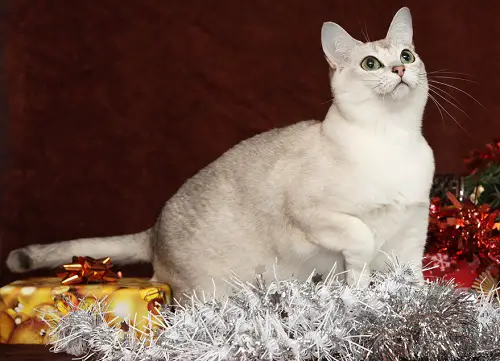
The Burmilla originated in the UK as a result of an accidental mating between a Burmese and a Chinchilla Persian. Even after more than two decades, this breed is still considered as one of the most beautiful “accidents” in the cat world.
The most distinctive feature of this breed is the sparkling silver coat and the wonderful and distinctive makeup-like lining on the eyes, nose and lips. Their eyes are very striking; as a matter of fact, many people find their eyes, especially the smokey eyeliner effect, to be the most striking feature of this breed. The contrast between their shading or tipping and their silver undercoat is simply stunning. They also have delicate tabby markings on the head, legs, and tail.
The Burmilla is a quite independent and irreverent cat that adores its owners and displays kitten-like personality into adulthood. They are affectionate, playful, and sociable, and get along well with strangers, children, and other animals.
This breed is still pretty rare in the U.S. With their medium energy level, Burmillas are ideal for the elderly, families, and singles. They love interactive toys, want to learn new tricks, and love the attention they receive from everyone around them.
General Information:
Height/Length: medium
Weight: 8-12 pounds
Lifespan: 7 -12 years
Coloring: the most common colors, either tipped or shaded, are black, blue, lilac, and chocolate
Area of Origin: UK
Similar Breeds: Burmese, Chinchilla Persian
Breed History and Origins:
The Burmilla is considered to be a beautiful mistake. It was created in 1981 in UK from a mating between a male silver Chinchilla and a female lilac Burmese. Both cats belonged to Baroness Miranda von Kirchberg. The tale about this breed is very cute and kind of romantic actually; Sanquist, the male Chinchilla, and Faberge, the female Burmese, were awaiting their partners for mating when they met. Faberge was later sent away to be mated with a Burmese cat, but she had a litter upon her arrival in the new place. The interesting thing is that the litter was pretty different from the Burmese; it was clear that Sanquist was the proud father of the litter.
The litter of Faberge and Sanquist consisted of four kittens, all females: Gisella, Gabriela, Galatea, and Gemma. They were so beautiful and attractive, so instead of neutering them, Miranda made the decision to develop them as the foundation stock of a brand new breed. The combined quality of their amazing look and superb temperament prompted a controlled breeding program in order to establish a new, wonderful breed that will bring the best of these two breeds. They were later crossed with a Burmese and the characteristics of the breed were retained. The Baroness managed to form the Burmilla Association in order to promote this beautiful new type of cat.
Nowadays, there are many breeders that promote the Burmilla in the UK. The U.S. has separate breeding programs where they use different lines of Burmese and Chinchilla. The popularity of this wonderful breed spread everywhere, especially to Northern Europe – Scandinavia.
The Burmilla is recognized by the Governing Council of the Cat Fancy, the Federation Internationale Feline, the Cat Fanciers Association, and the Australian Cat Federation.
Size and Physical Characteristics:
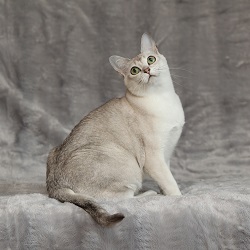 The Burmilla is a medium cat with a muscular, yet very elegant body. They have several distinguishing features, including their makeup lining on their face and their sparkling silver coat.
Their head is rounded and wider at eyes level and tapering to a blunt and short wedge. The size of the ears is medium to large with rounded tips. The nose is brick red with a dark outline. Burmilla kittens are usually dark at birth, and most of them have distinctive tabby markings.
Their coat is dense and has a raw silk feel. It can actually be either short (just like the Burmese) with a silky, soft feel; long (just like the Persian); or plush, which is a shorthaired version with a denser coat.
| The Burmilla | |
| Head: | Rounded head with a gentle nose break. Firm chin with good depth; chin and tip of nose are in line. |
| Coat: | Two coat lengths: shorthair and semi long. Both have a soft and silky feel. |
| Adult Weight: | 8-12 pounds |
| Size/Shape: | Medium |
| Legs: | Short legs with oval paws; the hind legs are longer than the front legs |
| Tail: | Medium to long tail tapering slightly to a rounded tip |
| Voice: | Quiet |
The green eyes are one of the most special features of the Burmilla. Their eyes, in a combination with “mascara” and nose liner, are set off to perfection. Eye shape is large and placed apart at an oblique setting and a curved lower line.
As for colors, the Burmilla coat has a variety of colors: black, brown, blue, lilac and chocolate. Varieties of cream and tortoiseshell have also been bred, but these colors are not recognized by the Australian CCCA. The shading comes in two coat patterns: shaded and tipped. Their nose is colored in correspondence to the color of their coat and outlined in the shading color. As for the paws, they correspond to the color of the coat.
Personality and Temperament:
Burmillas are not as boisterous as Burmese, but they are also not as laid-back as Chinchilla cats. Burmillas love attention, so they enjoy being a part of their family’s activities. They are pretty demanding, which is why they often follow their owners from one room to another, begging for attention in a sophisticated way. They love when their owners speak to them, and they seem like they understand every word their owners are saying.
They are one of the most intelligent breeds, which make them easily trainable. Burmillas are known for their funny technique of opening doors. They are very curious, and because of that, owners are advised to keep their Burmilla indoors. The comfort of home is the thing they love the most, so they will settle happily to a home arrangement.
As for their temperament, they also have features of both the Chinchilla and Burmese. They have the curious and playful, but not overly active nature of the Burmese, and the quiet Chinchilla nature. They do not need fancy toys for playing; they find fun in everything, so access to simple toys and scratching posts is of a big importance.
Words often used to describe this breed include playful, intelligent, gentle, affectionate, and sweet-tempered.
Loyal and devoted, they will spend the evenings by their owners keeping them company. Although human-oriented, they can be wary with their owners at first, but once familiar with you, they will become a happy lap cat. They need some time to start “talking” to strangers, but they will eventually open themselves up to friendly visitors.
They are adventurous, but a little clumsy, so owners are advised to put away their fragile belongings when a Burmilla is around.
All in all, they are outgoing, sociable and friendly, and have inherited modified characteristics from both of their original parents: quiet, but inquisitive and adventurous. The interest for this breed increases; Burmillas become more and more popular because of their great looks and nature.
Nutritional and Exercise Needs:
 Burmillas and Nutrition
During the first few months of their life, little Burmilla kittens should be breastfeeding, which is why they should not be separated from their mothers before they are at least two months old. At the age of two months, they can be introduced to kitten food.
Burmillas will mostly eat only proprietary brands of cat food, but they also enjoy cooked chicken treats, and grated cheese and ham, especially if their humans share treats with them. They should be fed a healthy diet of canned food, dry food, and raw meat. Cows’ milk might upset their stomach, so it should be avoided. Needless to say, a water bowl should always be available.
Quality cat food is reflected in the shiny coat and the tight, muscular body. It goes without saying that the cat’s food influences the cat’s appearance. One or more bowls of water and dry food should be placed in the house so that Burmillas can have an easy access to food and water whenever they are hungry or thirsty. Quality dry food keeps gums and teeth healthy and maintains good muscle tone. Canned food, on the other hand, is great for the overall health of the Burmillas. Cats do not always have the urge to drink water, even when their body needs water, so canned food is a highly recommended part of their diet plan. In order to avoid making the cat a finicky eater, owners should provide different meals because this way, they will not allow the Burmilla to become addicted to only one specific type of food.
In general, Burmillas are not prone to obesity, so they regulate their own diet plans quite well.
Burmillas and exercising
Cats have a high metabolism, but that does not mean they do not need physical activities to burn off calories.
When it comes to exercising, Burmillas love interactive playing. The concept of this type of playing is simple: the point is to simulate a predator-prey situation is what these games are about. The owners have to “think like a cat” in order to conduct a game that will allow the Burmilla to act like an athletic hunter.
Burmillas do not need expensive cat toys. Of course, they will need a scratching post and an indoor climbing frame. The thing with most toys is that they are essentially “dead” prey. With interactive games, the toy functions as the prey while your cat is the predator. Burmillas love consistency when it comes to their playing time, so owners are advised to maintain a regular playing schedule. Two 15-minutes sessions daily are more than enough. A half an hour a day of fun and playtime can really be beneficial for the physical and emotional health of a Burmilla.
The playful behavior of this breed is endearing – rarely frustrating. Burmillas are not boring; they politely “ask” their humans if they are available for some playtime.
Grooming and Upkeep:
 The coat of the Burmilla is smooth and short, and thus, it is simple to groom because it does not mat. Combing once a week is enough. Burmillas do a good job at keeping themselves clean, so bathing is not necessary. Brushing should be done weekly with metal bristles and elastic grip because only a regular brushing helps keep the coat in a good condition; It removes dirt, keeps the skin irritant-free and clean, and spreads natural oils throughout the coat.
Some cats do not find grooming to be enjoyable, but that does not mean that owners should just give up. If the Burmilla is stressed, the first grooming session should be kept short – only 5-10 minutes. Owners can then gradually add a few more minutes to each grooming session until their cat gets used to the routine.
Even if the only things the cat hunts are toy mice and chicken-flavored kibbles, they still need healthy gums and sharp and clean teeth. Damage to the gums, teeth and tongue can lead to health risks, so maintaining a proper dental health for Burmillas is highly recommended.
Nail trimming is another important grooming procedure. Manicures can be enjoyable for both the kitty and owner. Making friends with the paw will make grooming easier. Owners must be very cautious when trimming the nails; it is always better to cut less of the nail instead of risking cutting the sensitive area.
Burmillas have an acute sense of hearing, but these cats’ ears still need help staying clean. Vets recommend checking your Burmilla’s ears once a week for debris, wax and infection in order to help those cute sonar detectors stay alert and perky to every move.
Characteristic Unique to the Breed:
| Advantages | Challenges |
| Beautiful “makeup” look | Genetic health problems |
| Gets along with other cats | Slightly clumsy |
| Intelligent, devoted, and loyal | Might have behavioral issues if left alone |
| Quiet | |
| Easy and fun to train |
Burmillas are the best of both worlds: active, playful, and intelligent cats that also want to cuddle up to their owner after playtime. They are very affectionate, which is one of the many reasons why living with them is so interesting. They are always in the mood to entertain everyone around them, but are not too attention-seeking like some other cats. They are not always “on” – a characteristic they got from the Burmese, and are very humorous – something they got from the Chinchilla side.
They do not like being left alone for a longer part of the day. Playtime is the best bonding time that makes them truly happy.
Health and Wellness:
While these might be common health problems for Burmillas, it does not mean every Burmilla will develop any of the diseases listed below. The following are the most common disease found in this breed:
- Feline orofacial pain syndrome – this syndrome usually affects male cats, but females can also be affected. Common symptoms include exaggerated chewing and licking movements and excessive pawing at the mouth. The cat, however, remains alert to these unexpected movements. According to some studies, the disease is related to distress or oral pain, and is probably linked to dental disease.
- Congenital keratoconjunctivitis sicca – a condition that causes corneal vascularization, chronic conjunctivitis, and dry eyes.
- Polycystic kidney disease – an inherited kidney disease common for this breed. Cysts are formed in the kidneys and gradually increase in size as the cat is getting older. This disease is very serious and might lead to kidney failure.
Why Choose A Burmilla?
Burmillas are one of a few very affectionate breeds. They do not only sit around looking glorious; they are very playful and intelligent as well due to their quirky, curious and interesting nature. They are active and kitten-ish even into adulthood, warm and friendly, and great cuddlers.
They are not complicated when it comes to grooming and caring for them, and are very good with children and other pets. Their warm and lovely personality makes them a wonderful joy to every family. The striking contrast between their undercoat and tipping is what makes everyone fall in love with them, not to mention their makeup look – the dark penciling around their lids makes them unique.