Welcome to our Australian Mist Cats page! Here you will find everything you could ever want to know about Australian Mist cats and a complete list of all the Australian Mist catteries we have located in the USA.
If you could design a pet cat, what would you ask for? Most people look for beauty, gentleness, and an outgoing, people-centered personality. The ideal cat should be healthy, active but not hyper, and have short fur that doesn’t shed much. It fits into any home, getting along well with children and providing companionship for seniors. Fortunately, the Australian Mist satisfies all these requirements, making it what might be the perfect cat for you.
Australian Mist Breeders Near You

Australian Mist
- Are you a cat breeder who isn’t listed? Add your information here.
We also highly recommend reading checking out our latest news articles at our blog. Find information on Cat health, nutrition, holistic healing, basic care, toys, and much more!
Australian Mist Cat Breed Information
Breed History and Origins:
In the late 20th century, because feral cats were devastating Australian wildlife, cat expert Truda Straede decided to develop a breed that would stay indoors and be a great family pet and companion. She succeeded and the Australian Mist cat is a registered purebred with some cat fancier associations and a very popular pet in both Australia and the United Kingdom.
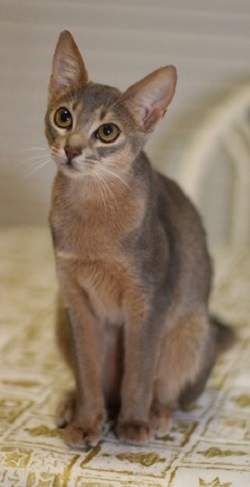
Abyssinians, Burmese cats, and moggies
Cats aren’t native to Australia. Most experts believe Europeans brought them along as pets and ship cats in the 19th century, although there is also evidence that they arrived in Australia earlier, when Malays traded them with native people.
In any event, cats are first mentioned there in historical records in 1804. They had already become wild in the Sidney area by the 1820s. In the 1880s and 1890s, most domestic cats worked in rural areas, controlling rabbits and other wildlife.
Basically, wherever Europeans went, cats followed. They did very well out in the wild on their own, too. With very few natural predators and lots of prey, cats quickly spread into every part of Australia and its island territories. Today the country hosts almost 3 million domestic and 18 million feral cats.
It was from the domestic cats that Truda Straede decided to build her new breed. First she chose the most common type of house cat in Australia today – tthe “moggie,” a domestic short-hair that has no pedigree. It’s the feline equivalent of a canine mongrel, but it has a sturdy build and rugged good health.
Next, she selected two pedigreed breeds – the Abyssinian and the Burmese. Abyssinians arrived in Australia from Britain and New Zealand in the late 1950s. The Burmese cat was brought there in 1957. Cat clubs centered around both breeds formed in the 1960s.
The designer cat
In the late 1970s Truda Straede began to breed her new line of cats. It took almost twenty years, but she succeeded. She named the new breed the Spotted Mist because of the patterns and misty appearance on its glossy coat. It had all the qualities anybody could want in an indoor cat.
In 1998, some Spotted Mist cats began to show swirling marble patterns on their fur instead of spots. It was a terrific new look, but what could it be called? Since this was the first cat breed ever developed in the country, patriotism took over. The breed’s name was changed to the Australian Mist.
Its popularity has soared in Australia and the UK ever since. In 2004, the Australian Mist was registered with the World Cat Federation. The UK’s Governing Council of Cat Fanciers recognized it in 2011.
Today these beautiful cats are also being established in the United States and Norway. However, the biggest breeding programs are still in Australia and the United Kingdom. If you don’t live there, you will have to travel to get your Australian Mist. The effort will be worth it; these are beautiful cats!
Size and Physical Characteristics:
 Australian Mist cats have the medium long, muscular body of the Burmese and Abyssinian, and the plush fur and ticked tabby patterns of the moggie. Their remarkable coat coloring and mist-like veiling, however, are unique.
Sturdy and supple
Australian Mist cats are heavier than they look. Their bodies are solid but very flexible since these easygoing kitties are usually very relaxed.
They have broad, gently rounded heads with big, low-set ears. These ears taper from a wide base to a curved tip and are tilted forward a little bit. The Australian Mist cat’s big eyes may be any shade of green and will slant inwards slightly. Its face is broad and full. Its cheeks are round and the chin is firm.
This cat breed has medium long, muscular legs and oval paws. Its hind legs are slightly longer than the forelegs, giving the cat’s back a pretty curve.
Patterns and misty ticking
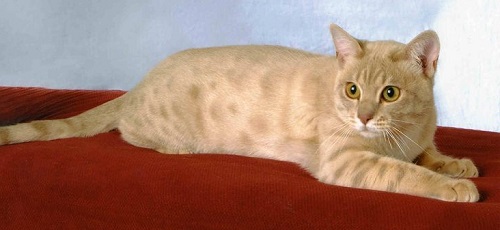
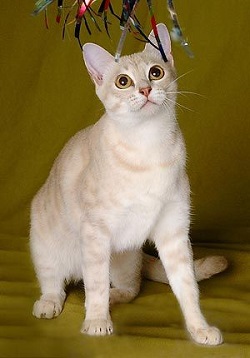
There are three levels of color on the dense, short-haired coat of an Australian Mist. First is the ground color, which is lighter than the pattern color. It might be a warm ivory, fawn, champagne, or another pale hue.
Next comes the pattern, which can be either marbling swirls or random spots of darker color against the background. Patterning is usually identical on either side of the cat’s body. The contrast with the ground color isn’t super strong, but you can always see a clear difference. Pattern colors vary. They might be a gentle brown against an ivory background, chocolate against fawn, pink or gold against cream, or a number of other possible combinations.
These cats have absolutely gorgeous coats, which become even more beautiful when the third color level – ticking – is added in. Each ticked hair on an Australian Mist has alternating bands of light and dark color (generally with a reddish hue). This is different from the solid colors on hairs that carry the ground and pattern colors. When you look at an Australian Mist, it really does have a misty, shimmering appearance that cat fanciers call a misted mantle. It is there because ticked hairs are spread randomly all over the cat’s body, reflecting light and color differently, depending on the animal moves.
| The Australian Mist | |
| Face: | Round, broad. Eyes: Shades of green, large, oval. Ears: Large, set wide apart. |
| Fur: | Short. Has ground color, pattern, and random ticking in a variety of colors. |
| Adult Weight: | 8-13 pounds (4-6 kg). Females are smaller than males. |
| Size/Shape: | Medium size and length. Graceful. |
| Legs: | Medium long. Very muscular. Paws are oval. |
| Tail: | Round and smooth. Not quite as long as body. |
| Voice: | Usually quiet, but varies with the individual. |
Australian Mist Personality and Temperament:
Australian Mists were bred to be adaptable, quiet, and very friendly. They are excellent with children, fit well into families of any size, and provide very good companionship.
An ideal family pet
These cats are absolutely wonderful with children. They enjoy being handled gently and bask in all the attention and love a child can give. They also will fit easily into any home environment as long as there are humans around to interact with.
Your Mist is very sociable. It will welcome guests at the door and quietly crawl up into any available lap for a cuddling session.
Australian Mist cats that have been neutered or spayed get along with other pets, including cat-friendly dogs. The hunting instinct hasn’t been totally bred out of them, though, so it is a good idea to keep small animals and birds out of their reach and to have a secure cover on the fish bowl or aquarium.
Affectionate companions
This is a peaceful, medium-sized pet that is especially good for apartment living. It is entertaining to watch, especially when young, but Australian Mist cats are never too rambunctious. In fact, you might find that they are watching you in return, ready to follow your lead.
The Australian Mist is intelligent enough to be trained to wear a leash, or do tricks. It also enjoys quiet cuddling and will happily purr away the hours in somebody’s lap or alongside them on a couch or chair.
These gentle cats make excellent therapy animals.
Caring For Your Australian Mist:
 This short-haired kitty doesn’t shed very much. Mists are low-maintenance pets and just need routine care of their claws and teeth.
Grooming
You will want to keep your Mist’s beautiful coat in top-notch condition. Fortunately, that’s very easy to do.
This breed has dense fur with little to no undercoat, like a Burmese cat. All it needs is gentle brushing once a month or so, although Kitty will want to be picked up and held much more frequently than that. With this affectionate feline, you could simply don a grooming glove during a petting session every now and then to remove any dead hair or dirt.
Claws and teeth
Most cats have 18 claws – five on each forefoot and four on each hind foot. They groom these by scratching things, which also lets them mark territory and stretch their back muscles. However, this only removes some of the outer layer of dead nail tissue. Not all of it comes off, and the nail also keeps growing, so you will have to help out from time to time, trimming the claws carefully every couple of weeks.
With the right tools and training, which your vet can give you, and with a little practice, this can be done quickly and safely. Also, because Australian Mist cats are so mellow, nail clipping isn’t likely to cause your cat to panic, especially if Kitty has been trained to accept this as a kitten.
This training should be extended to get the cat used to having its teeth brushed, too. All cats are prone to gingivitis. If you leave feline dental care to the vet, your Australian Mist cat will need general anesthesia, with all the risks that come with that. It is a lot easier and safer, not to mention less expensive, to get the right tools and toothpaste from your vet (never use toothpaste meant for humans) and do it yourself once every few weeks.
Nutritional needs
All cats, including the Australian Mist, are strict carnivores, which means that they must have meat. Domestic cats need twice as much protein as dogs do. They also need encouragement to drink water.
Cats are descended from desert wildcats who survived because their metabolism was able to use every part of their prey very efficiently. A wild rodent, for example, provides much more meat than it does fat or starch. Cats therefore had to develop the ability to get most of their energy from protein.
This dependence on protein worked out well in the deserts of the Middle East where cats were first domesticated. It also explains why feral cats do so well in Australia, but it limits the nutritional options for a domestic cat. Pet owners who keep their cats indoors need to make sure they are providing a complete and balanced diet.
It’s not difficult. Any domestic cat will thrive on commercial cat food in the United States, Europe, or the British Commonwealth that meets guidelines set by the American Association of Feed Control Officials (AAFCO). A statement about this usually appears on the label. Each serving provides complete nutrition, with the proper balance of protein, fat, carbohydrates, and other nutrients to keep your kitty healthy and happy.
The choice between canned and dry food, then, isn’t so much about a balanced diet as it is about water content. The Australian Mist’s desert ancestors didn’t need to develop a strong urge to drink – they got all the water they needed from the bodies of their prey. However, their home-bound descendants need a little help from us in order to get enough water.
Canned cat food contains the same amount of water as a cat would get from prey. Kitty can live solely on dry kibbles, too. Just be sure to have plenty of fresh water set out if its diet is exclusively dry food. The cat may get a little dehydrated on dry food, but if good water is available, it will always drink enough to stay healthy.
Characteristics Unique to the Breed:
No other cat breed in the world has the Australian Mist triple-level coat coloring. These cats are also famous for their friendliness, especially with children.
Warm, gentle colors
A word often used in connection with the colors of an Australian Mist cat is “rufous.” It comes from the Latin word for red, although it really means more of a reddish-brown hue. In the Mist, it usually means a warm, soothing pink, rose, or bronze tone to Kitty’s misted mantle – that third color level where the ticking makes the coat look like a shimmering veil.
When the background coat color is ivory, the patterning will be dark brown, and the mist will be a glowing reddish brown. A light fawn background is usually accompanied by blue to chocolate patterns and a rosy cream or copper mist.
Gold-colored Australian Mists have a creamy background coat with golden patterns and a rufous bronze mist. Those cats in the peach color category have a pink tone to their creamy background color, salmon-pink patterning, and a rufous salmon-pink mist.
The breed standard says that peach-colored Mists should have a “lilac glow,” but you have the general idea now: Australian Mist cats have one of the most beautiful coats of any domestic cat!
Loves handling and attention
This is one kitty that’s never aloof. Your Australian Mist always wants to be involved in your life. Though it isn’t demanding, a Mist is curious and wants to connect with all the people around it.
It’s like a child, in other words. Perhaps that’s the reason why this cat breed gets along so well with young children. Adults should always be nearby to supervise, but the Australian Mist cat usually enjoys being handled a lot and fussed over by young children.
Any cat will draw the line somewhere, of course. If things get too rough, this breed will just disengage and walk away rather than scratch. Playing with an Australian Mist teaches children all about the challenges as well as the joys of interacting with other living beings.
Australian Mist Health and Wellness:
 This is a very robust breed, with no hereditary problems. However, it is not very active as an adult. While that means less wear and tear on the furniture and knick-knacks, it does make the cat more prone to obesity. In addition, all cats need core vaccinations against widespread diseases and deadly diseases, and some may also need other immunizations.
Exercise and obesity
Australian Mist kittens are lively, but they quiet down as adults. This puts them at risk of obesity, one of the most common health issues for all domestic cats.
All you need to do to win Kitty’s battle of the bulge is watch calories (experts recommend about 75 kilocalories of food per kilogram of body weight) and encourage Kitty to stay interested in and interactive with its environment.
This affectionate cat will enjoy playing with you for a few minutes several times a day. Whirling feather toys, rolling balls with bells in them, and roving laser dots are always big hits. So is catnip. Many cats also enjoy climbing around on cat trees and using their built-in scratching posts. Another exercise option is a securely fastened window seat covered with fleece or some other soft material. The cat works out by leaping up there, even though it just hangs out and watches whatever is going on outside the window.
Routine health maintenance
All domestic cats everywhere in the world need to be immunized against feline distemper and two severe types of upper respiratory infection – FHV-1 and FCV. In Australia, these three vaccinations are sometimes given together as the F3 vaccine. They are given to kittens in a series, beginning at eight weeks of age, though adults can get them anytime. Once Kitty has gotten this initial series, it just needs boosters at regular intervals.
Rabies immunization is also considered a core vaccine in some regions, including the United States. It’s best to check with your veterinarian, who best knows your local regulations and what papers you will need for Kitty when traveling.
Not all cats need the non-core vaccinations against things like feline leukemia, chlamydophila, bordetella, and feline immunodeficiency virus. It depends on the cat’s lifestyle (whether it’s around other cats, for example, or if it will be bred). Once again, your vet can help you decide if any of the non-core vaccinations are right for your Australian Mist.
Interesting Facts about the Australian Mist:
- There are only about ten registered Australian Mist cats in the United States.
- Australian Mists are still being outcrossed to Abyssinian, Burmese, and moggies to develop the breed.
- The spotted or marbled pattern takes up to two years to develop.
- This breed can live into its mid to late teens.