Welcome to our American Bobtail Cats page! Here you will find everything you could ever want to know about American Bobtail cats and a complete list of all the American Bobtail catteries we have located in the USA.
American Bobtail Kittens For Sale

American Bobtail
- Are you a cat breeder who isn’t listed? Add your information here.
We also highly recommend checking out our latest news articles at our blog. Find information on cat health, nutrition, holistic healing, basic care, toys, and much more!
American Bobtail Cat Breed Information

Breed History and Origins:
The American Bobtail cat is a fairly new breed that originated in the southwestern United States in the 1960’s. The debut of the American Bobtail led to an outpouring of urban legends claiming that a wild hybrid cat had mysteriously appeared after a domestic tabby cat bred with a wild bobcat. The result was a feral, miniature bobcat, which came complete with hunter instincts and bobbed tail.
In reality, the exact origins of the American Bobtail can be traced back to “Yodie”, a domestic male tabby cat that was found by a couple on an Indian reservation as a kitten. The couple raised Yodie and later bred him with a seal-point Siamese, and the offspring became the foundation of the American Bobtail breed. Although tales of a miniature wild Bobcat roaming the Southwest were fictional, Yodie did in fact have a very short tail that he passed along to his offspring. Yodie’s short tail was found to be due to a random, spontaneous genetic mutation in a gene that controls feline tail length, the same mutation that gives the short tail seen in the Manx breed. During the development of the American Bobtail, several other breeds were added to the bloodlines including the Birman, the Himalayan and Himalayan/Siamese crosses during the 1970’s.
By the end of the 1970’s, one of the founders of the American Bobtail breed, Mindy Cave, a friend of the couple who owned Yodie, wrote the first breed standard for the American Bobtail. The breed standard included a detailed description for the cat which was characterized by a short tail, long hair, white paws and a white blaze on the face. However, due to the difficulties of working with such a complicated combination of genes which called for a bobbed tail, Himalayan coloring and white markings, a group of American Bobtail breeders broke away from the original blueprint in the mid-1980s. These breeders allowed a greater variety of coat pattern and coloration, and emphasized bobbed tail.
Today’s American Bobtails come in all colors and coat types. The American Bobtail was first recognized as a unique breed by The International Cat Association (TICA) in 1989. A milestone was reached in 2002 when the American Bobtail’s status was elevated and accepted for eligibility in championship competitions by TICA, The Cat Fancier’s Association, and the American Cat Fancier’s Association. Internationally, the American Bobtail is also recognized by the Cat Aficionado Association in China. The World Cat Federation, based in Germany, has recognized the American Bobtail as an official breed but sub-divided into two types, short-haired and long-haired.
Size and Physical Characteristics:
Body Type
The body of an American Bobtail is described as fairly solid, large-boned and somewhat “rugged” looking. The body is mid-length and appears stocky. Viewed from the front, the American Bobtail appears full-chested and broad. The American Bobtail is balanced with hips nearly equal in width to the chest, giving them an obvious rectangular shape and stance. The hind legs are slightly longer than the front legs, giving them the appearance of a wild Bobcat. The feet are round in shape, and there are often toe-tufts present.
The head is proportional to the body and has a broad wedge shape with no flat planes. The American Bobtail has a prominent brow, with a concave curve extending from the brow to nose. There is a wide muzzle, with heavy whiskers and a wide, slightly sloped nose and strong, square-shaped jaws. The ears sit evenly spaced between the top and side of the head and are medium in size and fairly wide across with rounded tips. The eyes have medium-wide spacing, are fairly deep-set, and have a slight almond shape. The eyes are of medium size and should be proportional to the head.
Unique to the American Bobtail is the shortened tail, and even within the breed no two tails are the same! The length of the tail measures from one-third to one-half the length of an average cat’s tail, although there is no particular preferred length within this range. The tail shape varies between individuals from straight to curved, and may be slightly knotted or have bumps along the length. The tail is strong and flexible, never fragile. It is fairly broad at the base and American Bobtails with straighter tails have a fat pad at the tip of the tail. The short tail can be seen above the back when the cat is alert and should not extend beyond the hock when relaxed. Due to the heavy, strong boning, the American Bobtail is a deceptively heavy cat for its size and usually weighs between 8 and 15 pounds, with males larger than females.
Coat and coloration
All eye colors and coat patterns are now accepted for the American Bobtail. This flexibility within the breed standard has resulted in an array of color variations and beautiful combinations to give almost any color imaginable. The American Bobtail’s possible colors include white, black, blue, red, cream, chocolate, lavender, cinnamon, fawn, and an array of patterns and shadings.
The breed has both long and shorthaired varieties that are acceptable by cat associations. Longhairs also have a double coat which is medium-long and has a fairly shaggy, dense appearance and feel. Long-haired American Bobtails have hair that is longer on the neck, back of the legs, belly and tail. The short-haired version of the American Bobtail has a medium length, double-coat that is rain resistant and has a non-matting texture. Although all color combinations and patterns are accepted, the preferred look is a coat pattern that gives the American Bobtail a somewhat wild appearance. Popular patterns include those which include lynx points, with well-defined stripes around the eyes, color points on the ears, feet and tail and striping on the body and legs.
All eye colors for American Bobtails are accepted, and they may vary greatly within a single coat color or pattern. Similar tabby-coat American Bobtails may have green, amber, or even blue eyes, adding further to the variety of looks within this breed.
| Advantages | Challenges |
| Very adaptable | Many potential health issues with tailless bobtails |
| Very gentle, often used in therapy | Can be vocal |
| Usually healthy when not tailless | Deep-set eyes must be cleaned carefully |
| One of the most family-friendly breeds | |
| Bathing is rarely required | |
| Easy to train with a leash |
Personality and Temperament:
American Bobtails are moderately energetic, very playful, highly intelligent, and enjoy the company of other cats, pets and family. They have a high level of ingenuity and are good problem solvers, known to find ways to escape from secured cages and rooms with closed doors. The American Bobtail enjoys puzzles toys, readily learns tricks and quickly learns the rules of fetch. Often this breed has been described as having a dog-like nature, running to the door to greet a family member returning home or being first in line to welcome dinner guests. American Bobtails are very social and communicative, asking for attention by meowing or simply hopping upon laps. And, while not as vocal as some breeds, the American Bobtail quickly learns to communicate his wants and needs through vocalizations beyond the standard meow and purr to include distinctive chirps, clicks and trills.
This breed is known for being devoted to family and caretakers, often following them around, engaging in games, and welcoming guests. Their easygoing nature and love of the outdoors makes them great candidates for leash-training. They are excellent family pets and thrive in a variety of lifestyles and households from laid-back to highly active. Because the American Bobtail is affectionate, patient, and confident, they make great candidates for homes with children. They usually get along well with other cats and dogs and, if properly introduced, make wonderful companions for any household pets.
The American Bobtail’s adaptable nature has earned this breed the reputation of being a good traveler, happily accompanying their owners on vacations. So comfortable with being on the move, this breed is often chosen as a companion for long-distance truckers. This adaptability combined with their loving and intuitive nature has made the American Bobtail a top choice for animal therapy and often work with psychotherapists in helping patients with a range of disabilities including post-traumatic stress disorder, anxiety disorders, and even autism.
Overall, the American Bobtail makes a fantastic family pet and will adapt and thrive in a variety of environments. Their intelligent, eager-to-please, and intuitive nature set them apart as one of the most devoted and family-friendly cat breeds. The American Bobtail’s kind, yet adaptable personality makes this cat happy to share time relaxing on the couch or engage in any number of games or activities.
Grooming and Upkeep:
 While the American Bobtail’s coat tends to be mat-resistant, the longhaired version benefits from a twice weekly brushing to prevent matting or tangling of the long coat. To keep the double coat in ideal condition, it is best to have several cat-specific brushes on hand. For the longer top coat, a wire slicker brush is recommended. The soft undercoat is best maintained using an undercoat brush that has combination of wide and narrow teeth followed by a finer-toothed comb. A soft bristle brush can be used on the head area.
The shorthaired version of the American Bobtail requires a once per week grooming with a slicker brush that has fine, soft pins and a soft bristle brush for finishing. Regardless of hair length, the American Bobtail tends to shed more during seasonal transition periods and it may be necessary to groom more frequently during spring and fall when the cat will shed more. Bathing is rarely needed. The nails of the American Bobtail should be trimmed twice per month to keep them short and prevent them from catching on rugs and furniture.
Oral hygiene is important for the prevention of periodontal disease. While daily brushing of the teeth is ideal, brushing at least once per week will go a long way and benefit the American Bobtail by preventing tooth decay and gum disease. Owners should consider professional teeth cleaning at least once per year.
The American Bobtail has fairly deep-set eyes, so it is important to keep the eyes clean and tear ducts healthy by using a clean, damp cloth to remove any discharge around the corners of the eyes a couple of times per week. Make sure to use a different cloth for each eye to reduce the risk of spreading any possible contamination.
A weekly check of the ears is important. If any dark or foul-smelling wax is present, clean them gently with a damp cotton ball or soft cloth. Make sure to avoid the using cotton swabs to clean ears as it is likely to cause damage to the inner ear and may result in permanent hearing loss or promote ear infections. While several brands of ear wipes and ear cleaning liquids are available, a homemade solution using a 50-50 mixture of apple cider vinegar and warm water is very safe and effective.
Exercise and Nutritional Needs:
Exercise Requirements
The American Bobtail is an active breed and appropriate exercise and nutrition are required to maintain optimal physical and mental health. Having space to play indoors as well as an assortment of interactive cat-safe toys and games will keep the American Bobtail in top shape and content. Spending 15-20 minutes per day on interactive games and activities will help prevent boredom and keep the cat from becoming destructive. Being highly intelligent, the American Bobtail will thrive if owners or caretakers engage in games that require problem solving, such as finding hidden toys or treats. They will quickly learn the rules of fetch, a game enjoyed by many American Bobtails.
It is best to keep the American Bobtail an indoor cat, which will prevent the contraction of diseases spread by other cats, lessen the likelihood of attacks by feral cats and dogs, and keep the cat safe from other dangers such as being hit by a car. A safe and fun way for the American Bobtail and his owner to experience the outdoors together can be accomplished through leash training, as this breed is known to easily adapt to walking on a leash, a great bonding exercise for both cat and owner.
Optimal Nutrition
One of the many factors that make the American Bobtail unique are his nutritional needs. This breed is very slow to mature, taking between two and three years to reach their full adult size. Therefore, choosing an appropriate and balanced food is imperative for the developmental health, ensuring that the bones, muscles, and nervous system receive adequate nutrition throughout the long period of development. Although the American Bobtail is not prone to overeating, it is important to select a good that matches the level of physical activity to maintain a healthy weight. Recommended food contain a minimum of a minimum of 30% protein, and maximum of 12% fat.
There are foods available which are appropriate for both kittens and adult cats and may be the best choice for the American Bobtail. These foods provide optimal nutrition for both kitten and adult life stages and therefore will prevent having to change foods as the cat matures as well as ensuring good health during long time period of development. Examples of appropriate foods include the following: Origen – Cat and Kitte, EVO – Turkey and Chicken Cat and Kitten and Canidae – All Life Stages. These are all recommended and will provide biologically appropriate nutrition.
Ideally, the American Bobtail should be fed dry kibbles as their primary diet, although occasionally supplementing with high-quality canned foods will be a welcome treat. It is not recommended that cats be fed canned food exclusively as it may promote periodontal disease and lead to poor oral health. Access to clean drinking water should be available at all times and water bowls should be made of stainless steel and cleaned on a daily basis.
Health and Wellness:
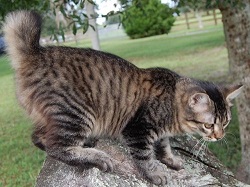 The American Bobtail is generally known as very healthy and hardy, and the average life expectancy of the American Bobtail is between 11-15 years. However; there are a few known health issues that affect the breed. Some American Bobtail kittens are born without tails and known as “rumpies”. Instead of a tail, these kittens have a slight indentation at the base of the spine where a tail would normally be found. While this may appear to be an aesthetic issue at first, these cats and kittens should be avoided by prospective owners as lacking a tail may indicate more serious issues such as a shortened spine.
Shortened spines can result in the development of neurological and orthopedic issues due to gaps in the vertebrae and fused vertebrae. Spina bifida, a painful and often fatal condition in which the spinal column fails to close completely during development such that the spinal cord may protrude through the opening at the base of the spine is sometimes found in American Bobtails that are born tailless. Further complications can affect the bowel and bladder, or both, and can lead to problems such as uncontrolled urination and defecation. Some of these unfortunate defects often cause such discomfort and are so serious that the affected cat must be put down.
The American Bobtail is also known to be prone to hip dysplasia, which can cause pain in the joints, stiffness, lameness, and painful osteoarthritis in the hip joint. While this condition is not life-threatening, it may severely affect the cat’s quality of life it can be extremely painful as the cat ages and may progress to a point that the cat will require life-long medical interventions, including daily medication and even surgery. When choosing an American Bobtail, it is important to find a quality breeder who is aware of these health issues and breeds responsibly in an effort to minimize or eliminate the likely hood of kittens born with these defects.
It is important that all American Bobtails be taken to the veterinarian on a regular basis and that all vaccinations and health checks are kept up to date. This will ensure the cat maintains optimal health and wellness, and is protected from life-threatening diseases which are easily prevented by vaccination.
Characteristics Unique to the Breed:
The American Bobtail has a unique physical appearance characterized by a short tail, hunter-like gaze, and many similarities in appearance to wild bobcats or lynxes. Contrasting this untamed look, the American Bobtail is found to be one of the friendliest, most charming, and most family-friendly domestic cat breeds. This breed is one of the few recognized breeds by national and international cat associations that is accepted for competition in any and all color combinations, giving them an appealing and exciting diversity. They are very slow to develop, taking nearly three years, and setting this breed apart with regard to nutritional requirements that must be met to ensure longevity and optimal health.
Interesting Facts about the American Bobtail:
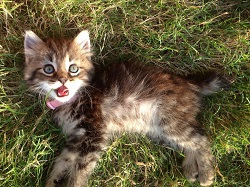 The American Bobtail was first developed as a breed in the 1960’s in the American Southwest.
- American Bobtails have a short tail due to a genetic mutation.
- The American Bobtail loves to travel and is often a companion for long-distance truck drivers.
- The American Bobtail has an intuitive and gentle nature, and is often used in therapy.